American Eel
Anguilla rostrata
A snake-shaped, year-round resident of the tidal rivers and creeks, most active at night — a common incidental catch and a prized striper and cobia bait.
Typically present
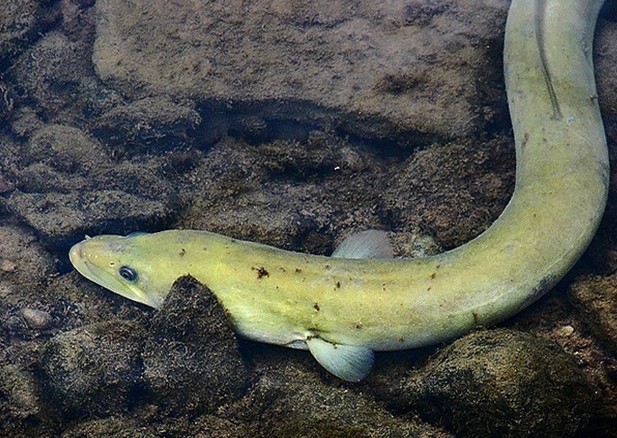
Photo: USGS Eastern Ecological Science Center, U.S. Geological Survey — Public domainLong edge is 617px, below this project's 1600px preference. Accepted because it is the best rights-clear, correctly-identified photo found for this species — see SPECIES_PHOTO_AUDIT.md for the source search record.
- Habitat
- Marshes & creeks, Tidal rivers
- Methods
- Freshwater, Shore, Kayak
- Difficulty
- intermediate
- Eating
- fair
Identification
Look for
- An extremely elongated, snake-like body with no pelvic fins — the most distinctive tell versus bowfin (which has paired pelvic fins) or northern snakehead (a much stockier, mottled-tan body)
- Long dorsal and anal fins that merge seamlessly into the tail fin, giving the appearance of one continuous fin running around the back half of the body; olive-brown to yellow-olive with a silvery sheen on the lower sides
Local waters
Tidal rivers, creeks, and freshwater tributaries throughout Hampton Roads — catadromous, spending most of its life in fresh/brackish water and migrating to the Sargasso Sea to spawn
Catchable both from shore (bank/shore) and by boat (kayak, inshore boat).
When to fish
Present year-round in the region; most active in warm months and after dark.
Tide stage for this kind of water
Falling water at the creek mouths
From: Reading tides without overthinking themWater temperature
The water, not the calendar, sets the season here — a warm October or a cold snap moves these bands.
Water temperature and the seasonsHow to catch it
Catchable both from shore (bank/shore) and by boat (kayak, inshore boat). Technique notes for this species have not been written yet; the baits and rigs below are the documented starting points.
Bait & lures
- Cut bait or worms fished on bottom at night
- Eel pots (up to 2 permitted per angler under a saltwater recreational license)
On the table
Eat with caution — check current Virginia fish consumption advisories for the specific waterbody before eating.
- A common incidental catch and a well-known regional bait species (cut/live eel for striped bass and cobia) — see this project's own bait guide. Population declines have made American eel a species of real conservation interest; minimum size for personal-use retention is 9 inches.
Where to try
Water that suits american eel
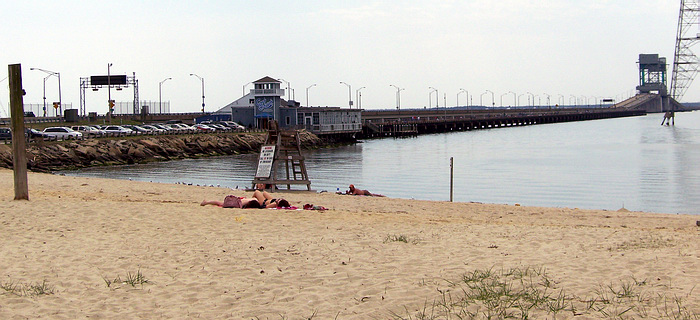
Photo Mytwocents, CC BY-SA 3.0
Fishing pierShorelineHabitat matchJames River pier & shoreline
Long tidal-river pier reaching out over deep water, mixing saltwater panfish with tidal-river species.
5 speciesFamily-friendlyAccessible featuresRestrooms- No verified photo yet37.11° N 76.32° WKayak launchShorelineHabitat match
Poquoson marsh kayak launch
Quiet grass-and-creek country for paddlers — shallow water, oyster bars, and very little boat pressure.
4 speciesFamily-friendly - No verified photo yet37.11° N 76.32° WBeachShorelineHabitat match
Grandview Nature Preserve shoreline
A long walk-in Bay shoreline backed by marsh — solitude, wading depth, and a genuinely wild feel inside the city.
5 speciesFamily-friendly - No verified photo yet36.82° N 76.29° WShorelineParkHabitat match
Portsmouth city park shoreline
Urban tidal-river access with parking, restrooms, and level ground — a practical after-work or with-kids option.
4 speciesFamily-friendlyAccessible featuresRestrooms - No verified photo yet36.57° N 76.28° WShorelineKayak launchHabitat match
Northwest River Park
Cypress-lined blackwater — classic pickerel and bass water, quiet paddle in.
2 speciesFamily-friendlyAccessible features 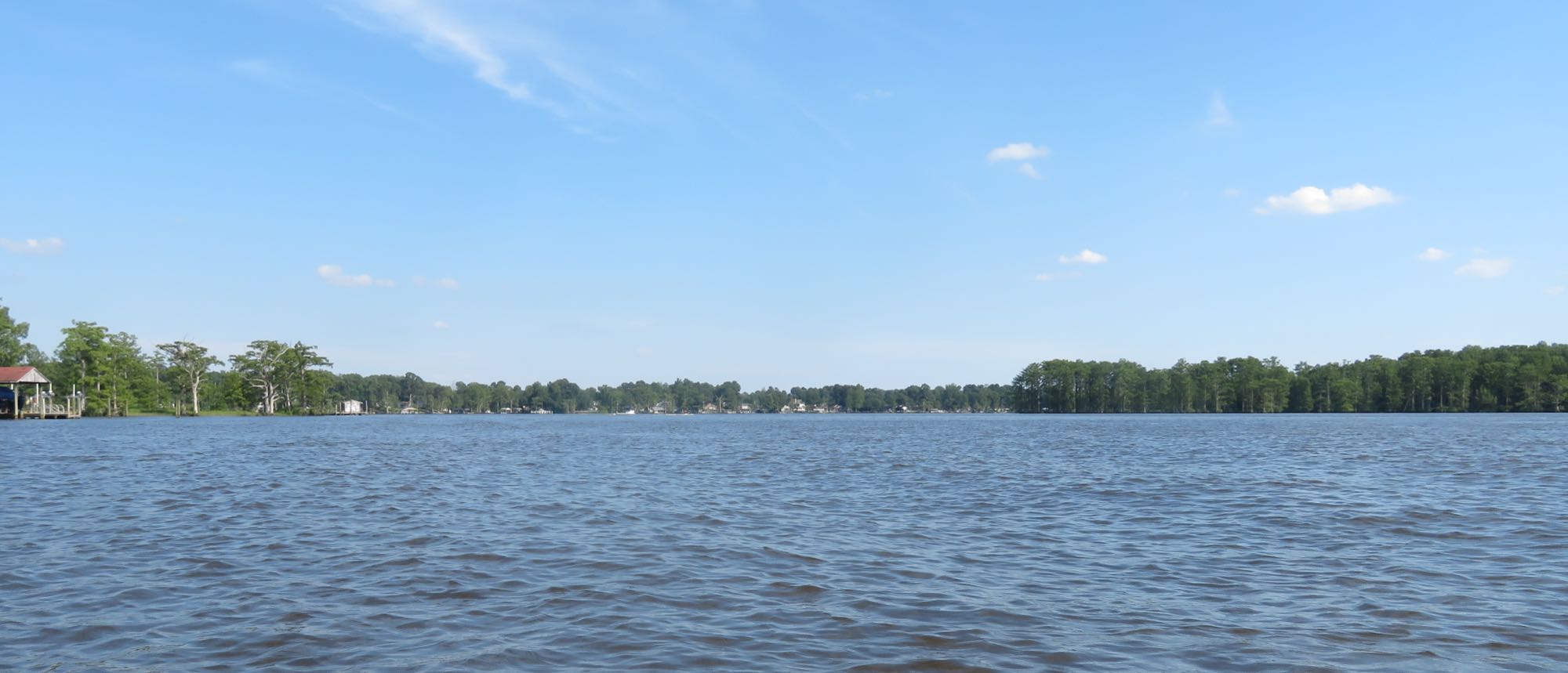
Photo David R. Bains, CC BY-SA 4.0 (representative)
ShorelineBoat rampHabitat matchChickahominy riverfront access
Tidal freshwater river with ramps, wide flats, and cypress shoreline — a strong bridge between fresh and brackish fishing.
3 speciesFamily-friendlyAccessible featuresRestrooms

