Northern Snakehead
Channa argus
An established invasive predator of the tidal rivers — a mottled, toothy, air-breathing fish that must not be kept alive, and is good on the plate.
Typically present
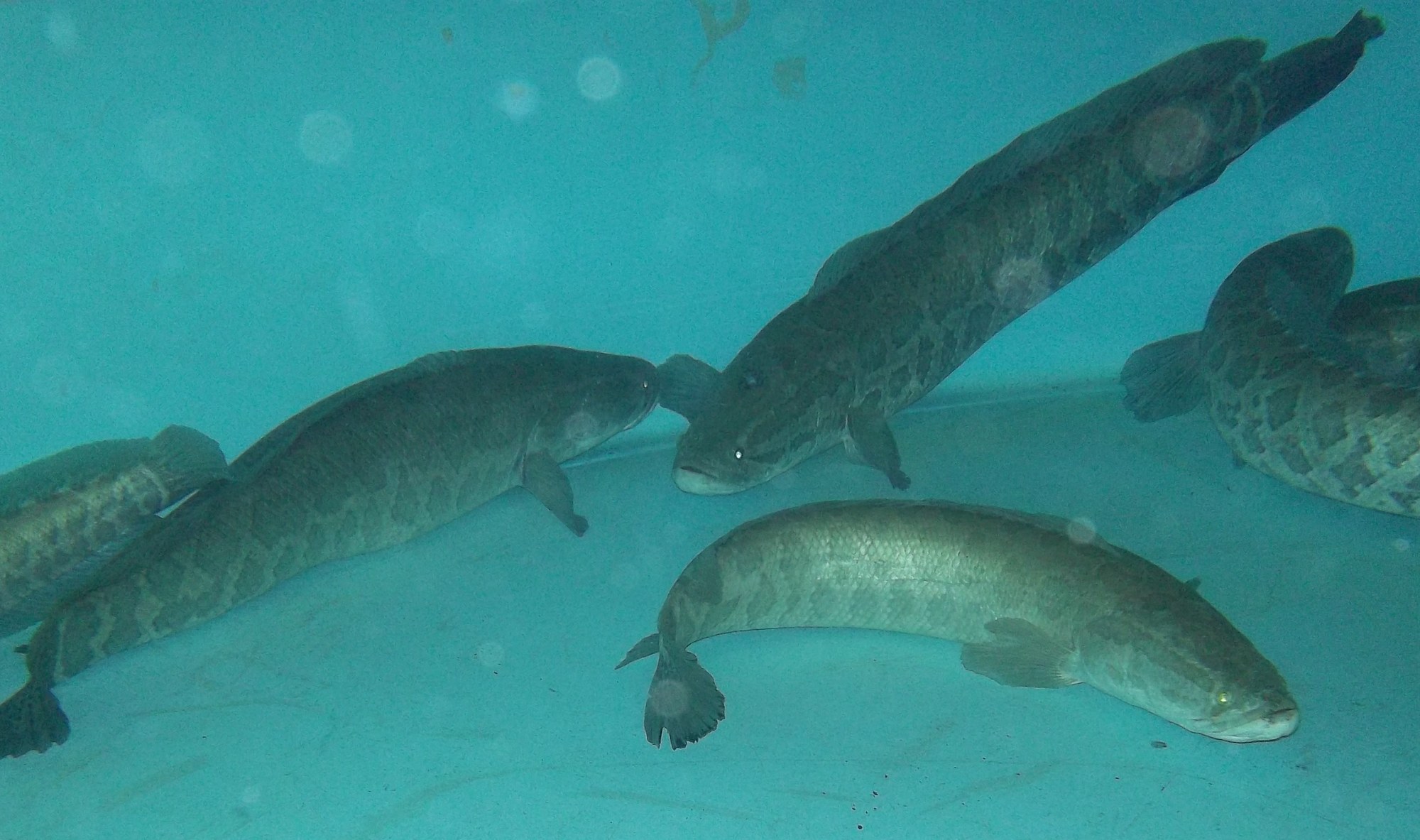
Photo: Christine Densmore / USGS Eastern Ecological Science Center, U.S. Geological Survey — Public domain
- Habitat
- Tidal rivers
- Methods
- Shore, Kayak
- Difficulty
- intermediate
- Eating
- good
Identification
Look for
- A tan body with dark brown mottling and numerous large, canine-like teeth (similar to a pike or pickerel) — the key tell versus bowfin, which has much smaller peg-like teeth and a distinct tail eyespot northern snakehead lacks
- A long dorsal fin running nearly the entire length of the back and a long anal fin, giving a superficially eel-like or bowfin-like silhouette at a glance
Local waters
Established in Hampton Roads-area tidal rivers and their tributaries, including documented expansion into the Pamunkey and other James/York River tributaries
Catchable both from shore (shore) and by boat (kayak).
When to fish
Present year-round where established; most active and most frequently caught in warm months.
Tide stage for this kind of water
Moving water at bends and creek mouths
From: Reading tides without overthinking themWater temperature
The water, not the calendar, sets the season here — a warm October or a cold snap moves these bands.
Water temperature and the seasonsHow to catch it
Catchable both from shore (shore) and by boat (kayak). Technique notes for this species have not been written yet; the baits and rigs below are the documented starting points.
Bait & lures
- Live minnows or cut bait fished near vegetation
- Topwater frogs and soft-plastic swimbaits worked through weedy cover
On the table
Commonly eaten — always confirm current legal size/possession limits with VMRC or DWR before keeping.
- A real, actively-managed invasive species established in this project's coverage area. Live possession is illegal without a DWR permit — a snakehead caught and immediately released has no obligation attached, but any snakehead kept must be killed (removing the head, separating the gill arches, or removing the internal organs) and the catch reported to Virginia DWR's snakehead hotline (804-367-2925) with the angler's last name, date, location, and size.
Where to try
Water that suits northern snakehead
- No verified photo yet36.57° N 76.28° WShorelineKayak launchHabitat match
Northwest River Park
Cypress-lined blackwater — classic pickerel and bass water, quiet paddle in.
2 speciesFamily-friendlyAccessible features 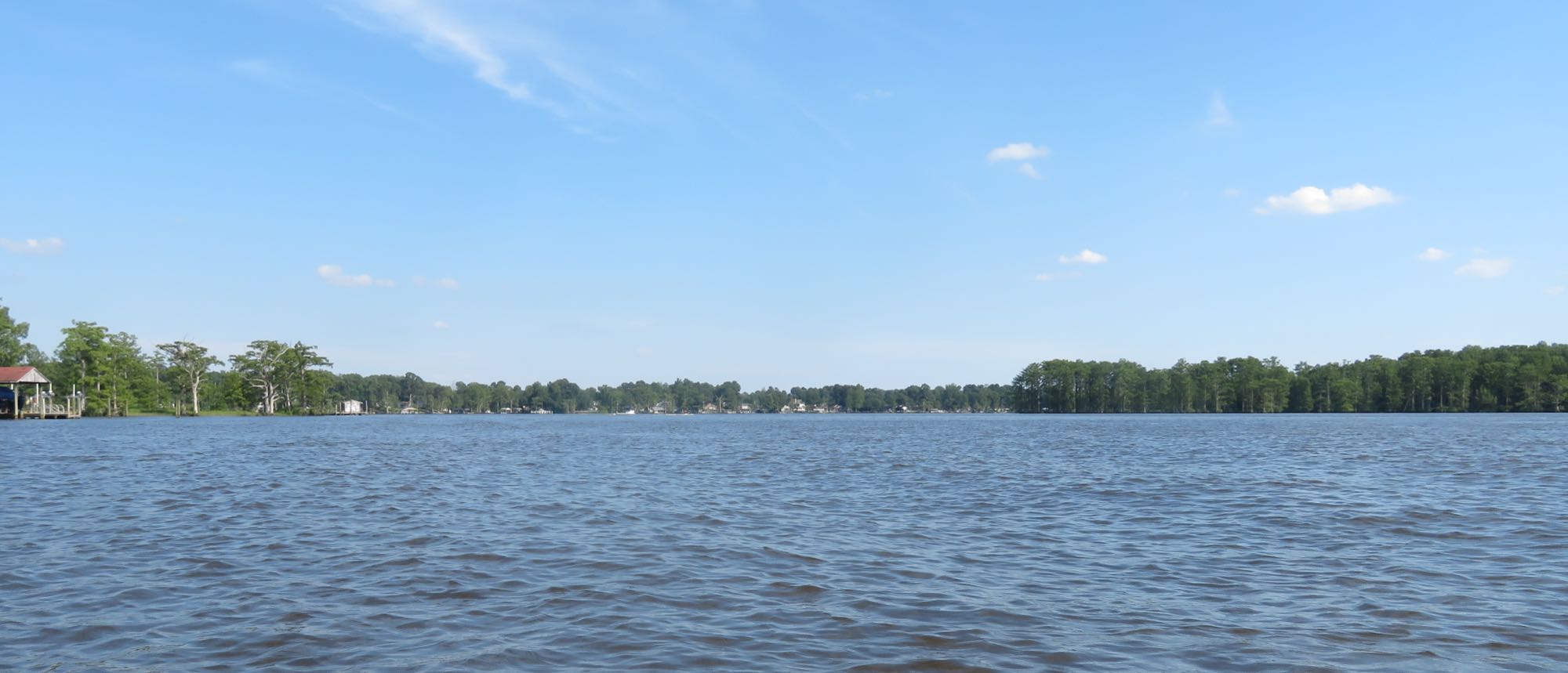
Photo David R. Bains, CC BY-SA 4.0 (representative)
ShorelineBoat rampHabitat matchChickahominy riverfront access
Tidal freshwater river with ramps, wide flats, and cypress shoreline — a strong bridge between fresh and brackish fishing.
3 speciesFamily-friendlyAccessible featuresRestrooms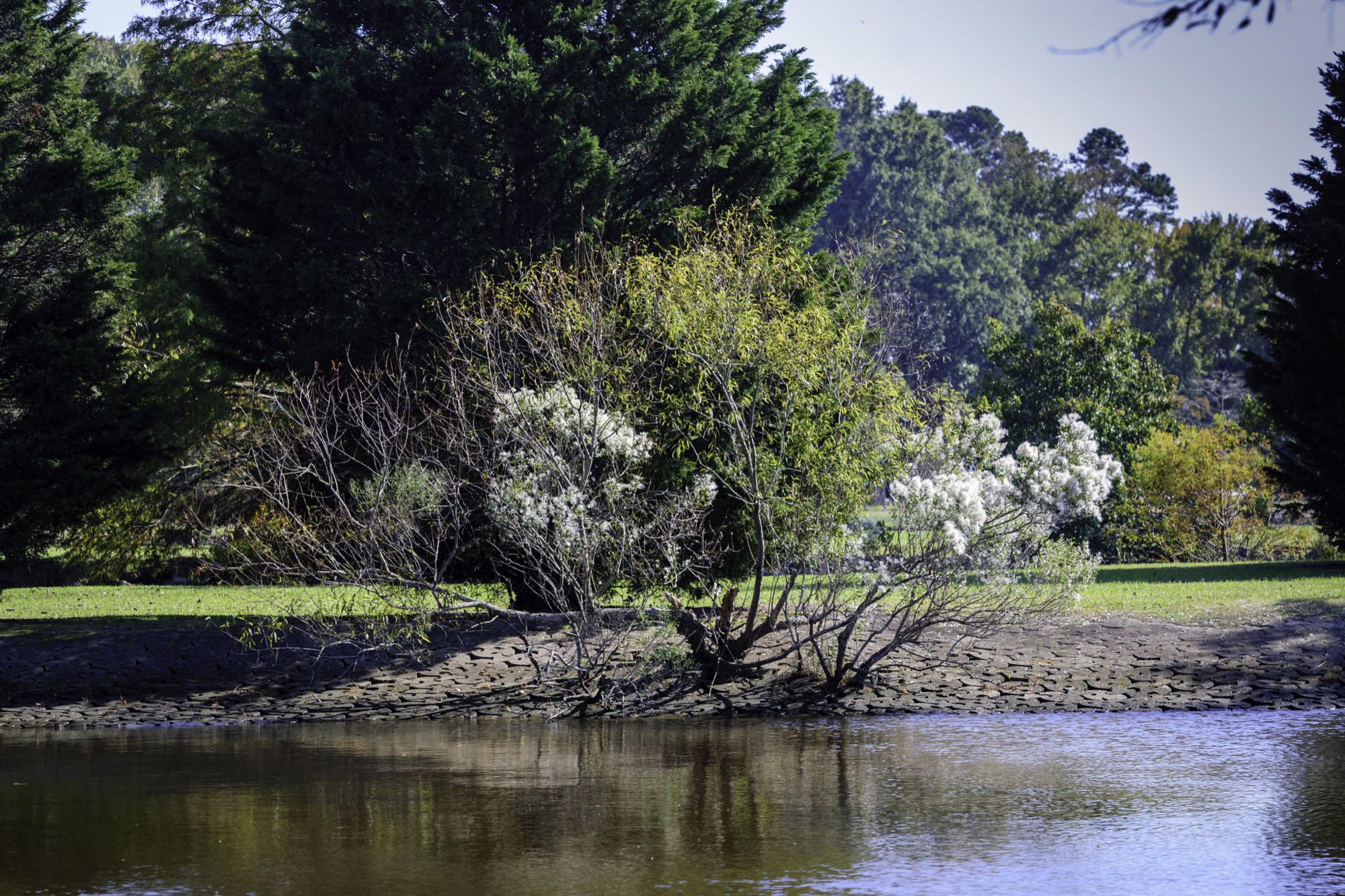
Photo Randy Everette, CC BY-SA 3.0
Kayak launchBoat rampHabitat matchMunden Point Park
Launch before sunrise — the grass line off the point holds bass until boat traffic picks up.
2 speciesAccessible features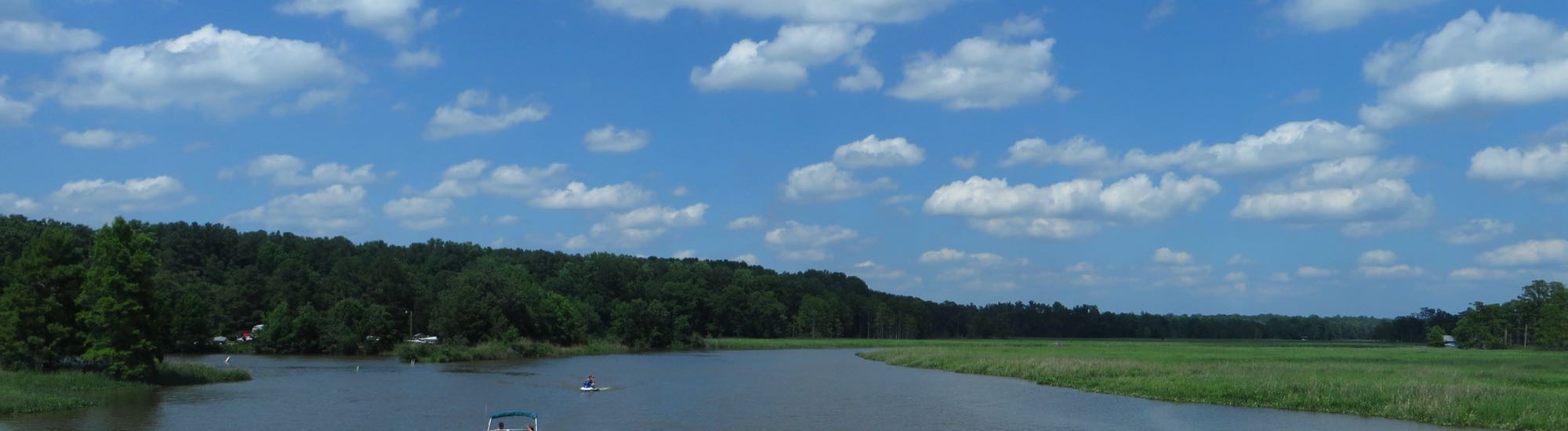
Photo Ken Lund, CC BY-SA 2.0
ShorelineKayak launchHabitat matchPowhatan Creek Park and Blueway
Five observation/fishing piers along a tidal creek near Jamestown Island, plus a non-motorized boat launch — open 24 hours.
3 speciesFamily-friendly


