Smallmouth Bass
Micropterus dolomieu
The bronze river-rock bass of cooler water upstream of Hampton Roads — uncommon here, common toward the fall line, and covered so it can be told from largemouth.
Typically present
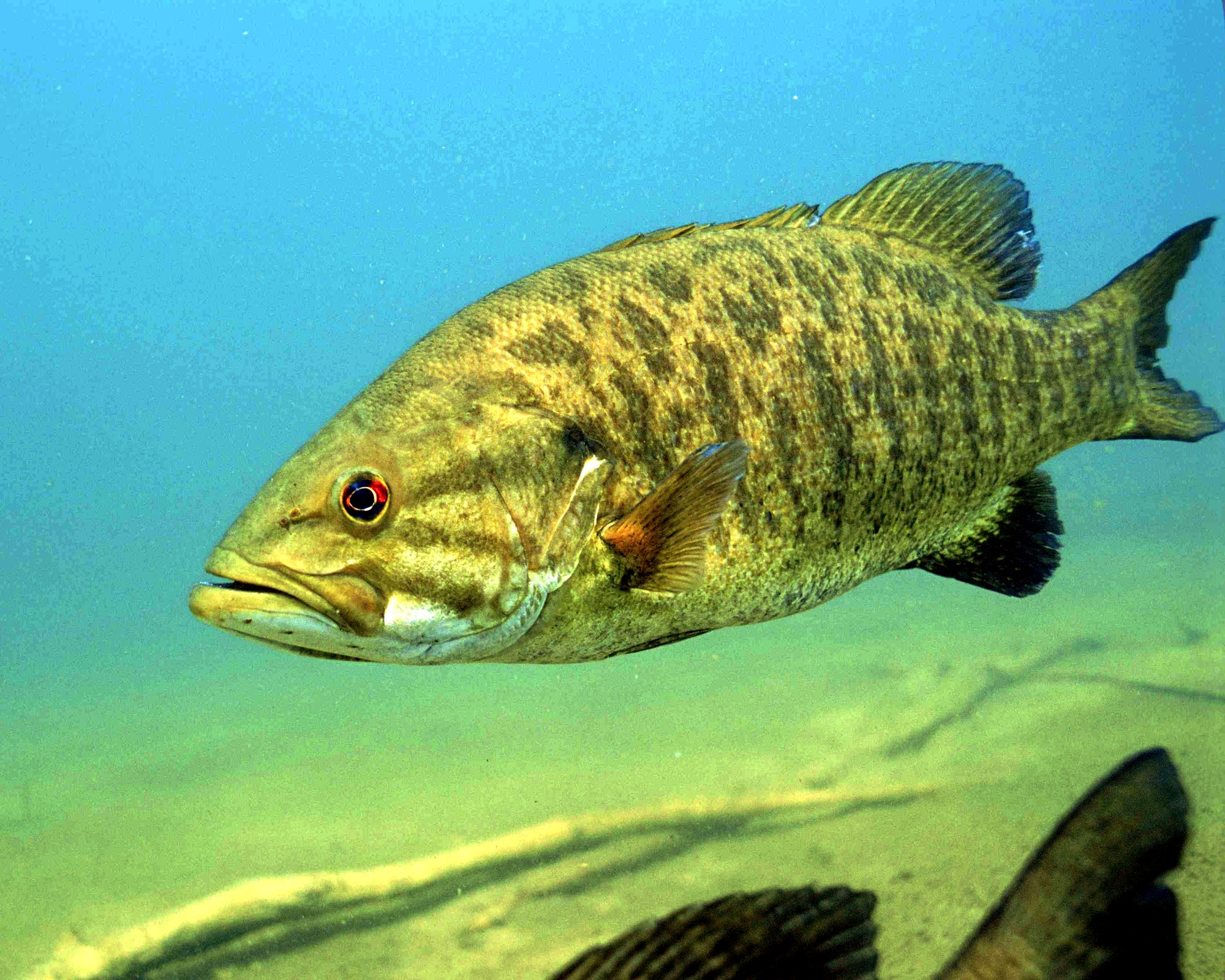
Photo: Eric Engbretson / U.S. Fish and Wildlife Service, U.S. Fish and Wildlife Service — Public domain
- Habitat
- Tidal rivers, Freshwater lakes
- Methods
- Freshwater, Shore
- Difficulty
- intermediate
- Eating
- Usually released
Identification
Look for
- Jaw does NOT extend past the back of the eye when the mouth is closed — the key field mark separating it from largemouth bass, whose jaw does
- Dark bars radiate from the eye across the cheek and gill cover
- Shallower dorsal-fin notch than largemouth bass
- Typically bronze or brown, though coloring varies with diet/habitat/watershed
Local waters
- Cooler, rockier freshwater rivers and reservoirs
- Coolwater impoundments
A shore fishery here — typically fished from bank/shore, no boat required.
When to fish
Spring pre-spawn and fall are most active in cooler, rockier freshwater rivers/reservoirs — less common in Hampton Roads proper than further inland/upstream toward the fall line.
Tide stage for this kind of water
Moving water at bends and creek mouths
From: Reading tides without overthinking themWater temperature
The water, not the calendar, sets the season here — a warm October or a cold snap moves these bands.
Water temperature and the seasonsHow to catch it
A shore fishery here — typically fished from bank/shore, no boat required. Technique notes for this species have not been written yet; the baits and rigs below are the documented starting points.
Bait & lures
- Soft plastic tubes/craws worked along rocky structure
- Crankbaits and jerkbaits
- Topwater in low light
Handling and release
Not a food-use species in this guide (catch-and-release or restricted) — release.
- Native to Virginia's southwestern watersheds (upper Big Sandy, Clinch, Holston, Powell, and Tug) but established via introduction throughout coolwater portions of most of the state — a real but edge-of-range Hampton Roads presence compared to the much more common largemouth bass. Statewide baseline regulation is 5 bass in aggregate (largemouth and smallmouth combined) with no statewide minimum length, though many specific waters carry their own protected-slot/minimum-length/trophy rules that override the baseline — always check the specific water before keeping fish.
Where to try
Water that suits smallmouth bass
- No verified photo yet36.75° N 76.63° WShorelineBoat rampHabitat match
Suffolk reservoir shoreline
Cypress-lined municipal reservoir water — quiet freshwater fishing with permit requirements and posted rules.
2 speciesFamily-friendly - No verified photo yet36.57° N 76.28° WShorelineKayak launchHabitat match
Northwest River Park
Cypress-lined blackwater — classic pickerel and bass water, quiet paddle in.
2 speciesFamily-friendlyAccessible features 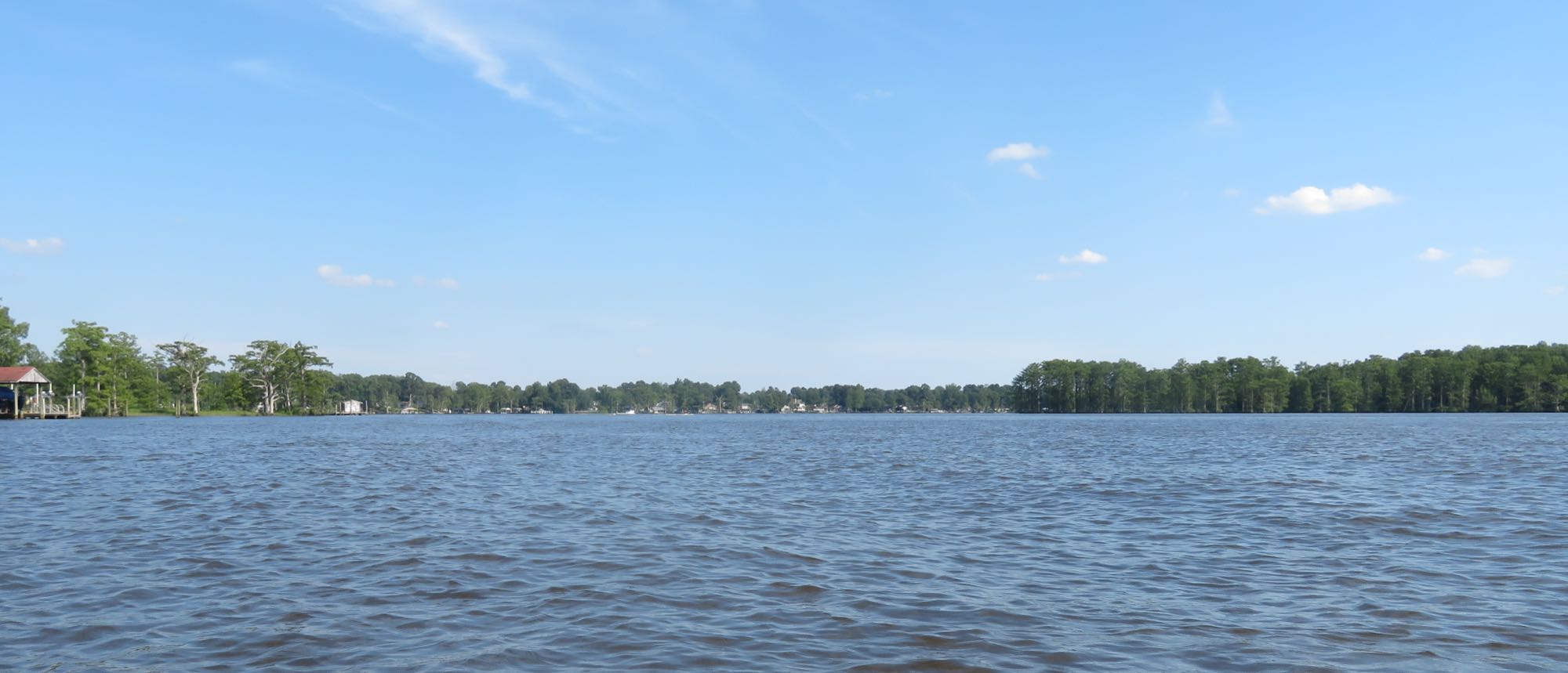
Photo David R. Bains, CC BY-SA 4.0 (representative)
ShorelineBoat rampHabitat matchChickahominy riverfront access
Tidal freshwater river with ramps, wide flats, and cypress shoreline — a strong bridge between fresh and brackish fishing.
3 speciesFamily-friendlyAccessible featuresRestrooms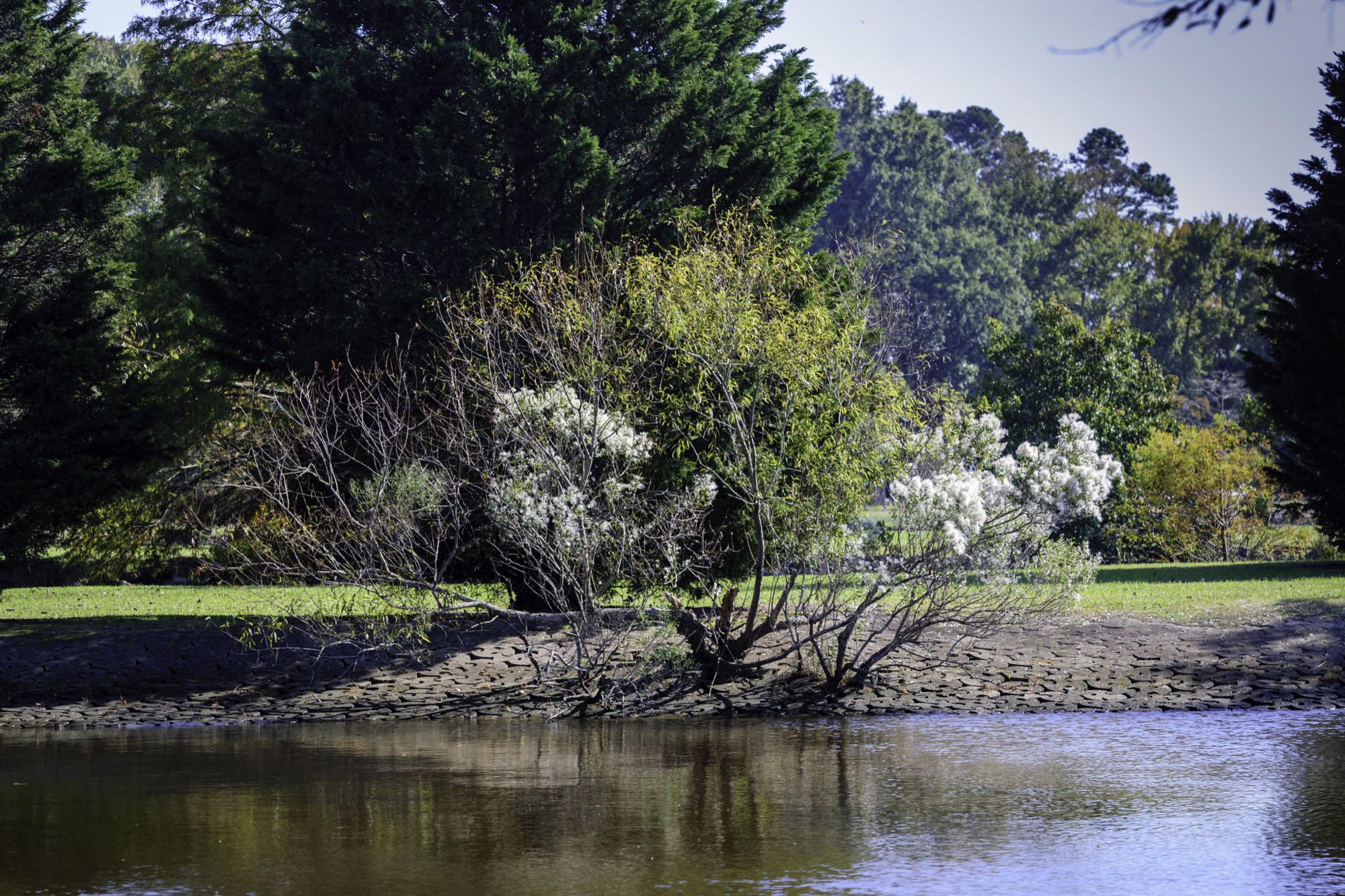
Photo Randy Everette, CC BY-SA 3.0
Kayak launchBoat rampHabitat matchMunden Point Park
Launch before sunrise — the grass line off the point holds bass until boat traffic picks up.
2 speciesAccessible features- No verified photo yet36.88° N 76.13° WShorelineKayak launchHabitat match
Lake Smith & Lake Lawson
Reliable year-round freshwater — crappie stack up along the standing timber in spring.
2 speciesFamily-friendlyAccessible features - No verified photo yet37.18° N 76.55° WShorelineKayak launchHabitat match
Lee Hall Reservoir
A 230-acre city-owned reservoir inside Newport News Park — electric-motor-only water with a well-documented, diverse fish population.
4 speciesFamily-friendlyAccessible features

