Largemouth Bass
Micropterus salmoides — also called bucketmouth
The freshwater bass of the reservoirs, millponds, and blackwater rivers — a cover-oriented ambush fish caught on weedless plastics and topwater, and released by most anglers here.
Typically present
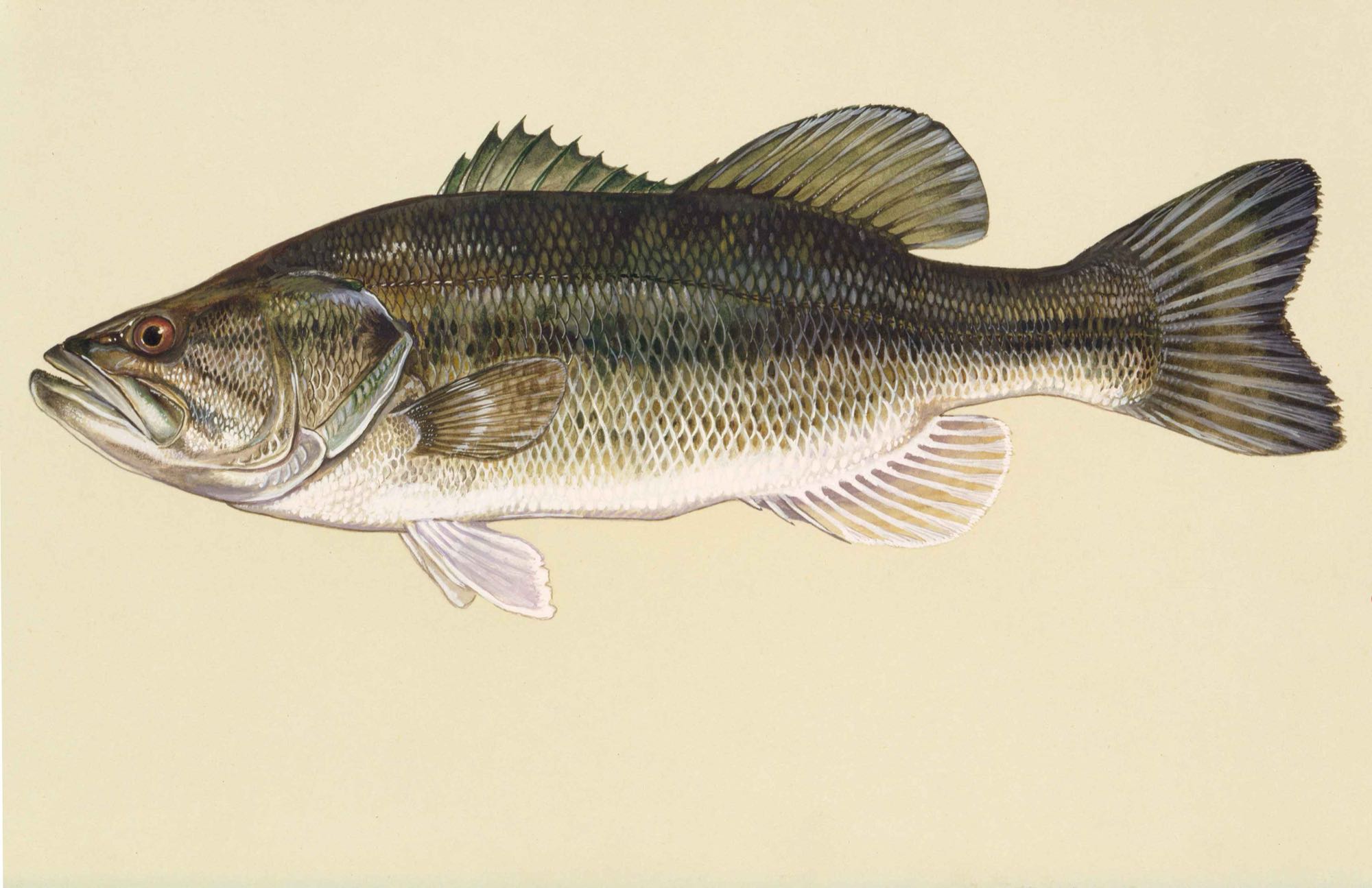
Illustration: Duane Raver / USFWS, U.S. Fish and Wildlife Service — Public domain
- Habitat
- Tidal rivers, Freshwater lakes
- Methods
- Freshwater, Shore
- Typical size
- 1–3 lb
- Eating
- Usually released
Identification
Look for
- Upper jaw extends past the back of the eye when the mouth is closed — the single most reliable field mark versus smallmouth/spotted bass
- Deeply notched dorsal fin (the two dorsal fins nearly separate); dark, often broken lateral stripe along the side
- Typical size here
- 1–3 lb
- Notable fish
- 5 lb-plus fish from the reservoirs and blackwater rivers
Local waters
- Vegetation, laydowns, and other freshwater cover
- Blackwater ponds, lakes, and slow rivers
A shore fishery here — typically fished from bank/shore, no boat required. 7 spots in this guide document it — see water to try below.
When to fish
Spring pre-spawn and fall are most active; summer mornings/evenings and winter deep water also produce.
Tide stage for this kind of water
Moving water at bends and creek mouths
From: Reading tides without overthinking themWater temperature
The water, not the calendar, sets the season here — a warm October or a cold snap moves these bands.
Water temperature and the seasonsHow to catch it
- Weedless soft plastics (Texas-rigged worms, wacky stick baits) through grass, lily pads, and laydowns — slow in cold water, faster in summer.
- Topwater at dawn and dusk in summer; spinnerbaits along cover edges when the water is stained.
- In the tidal rivers, fish the falling tide at creek mouths and drains, where the current pulls bait out.
Bait & lures
- Soft plastic worms and creature baits
- Spinnerbaits and topwater in low light
- Crankbaits along cover edges
Tackle to start with
Rigs for largemouth bass
All rigs- Sheet 14Floatbeginner
Panfish float rig
For crappie, yellow perch, white perch, chain pickerel from lake, river, marsh.
CrappieYellow PerchWhite Perch - Sheet 06Lurebeginner
Jig head and soft plastic
For speckled trout, red drum, flounder, striped bass from bay, marsh, inlet, river, lake, bridge.
Speckled TroutRed DrumFlounder - Sheet 17Lureintermediate
Drop-shot rig
For largemouth bass, crappie, white perch from lake, river.
Largemouth BassCrappieWhite Perch
Packing lists written for it
Handling and release
Not a food-use species in this guide (catch-and-release or restricted) — release.
Where to try
Water that suits largemouth bass
- No verified photo yet36.57° N 76.28° WShorelineKayak launch
Northwest River Park
Cypress-lined blackwater — classic pickerel and bass water, quiet paddle in.
2 speciesFamily-friendlyAccessible features 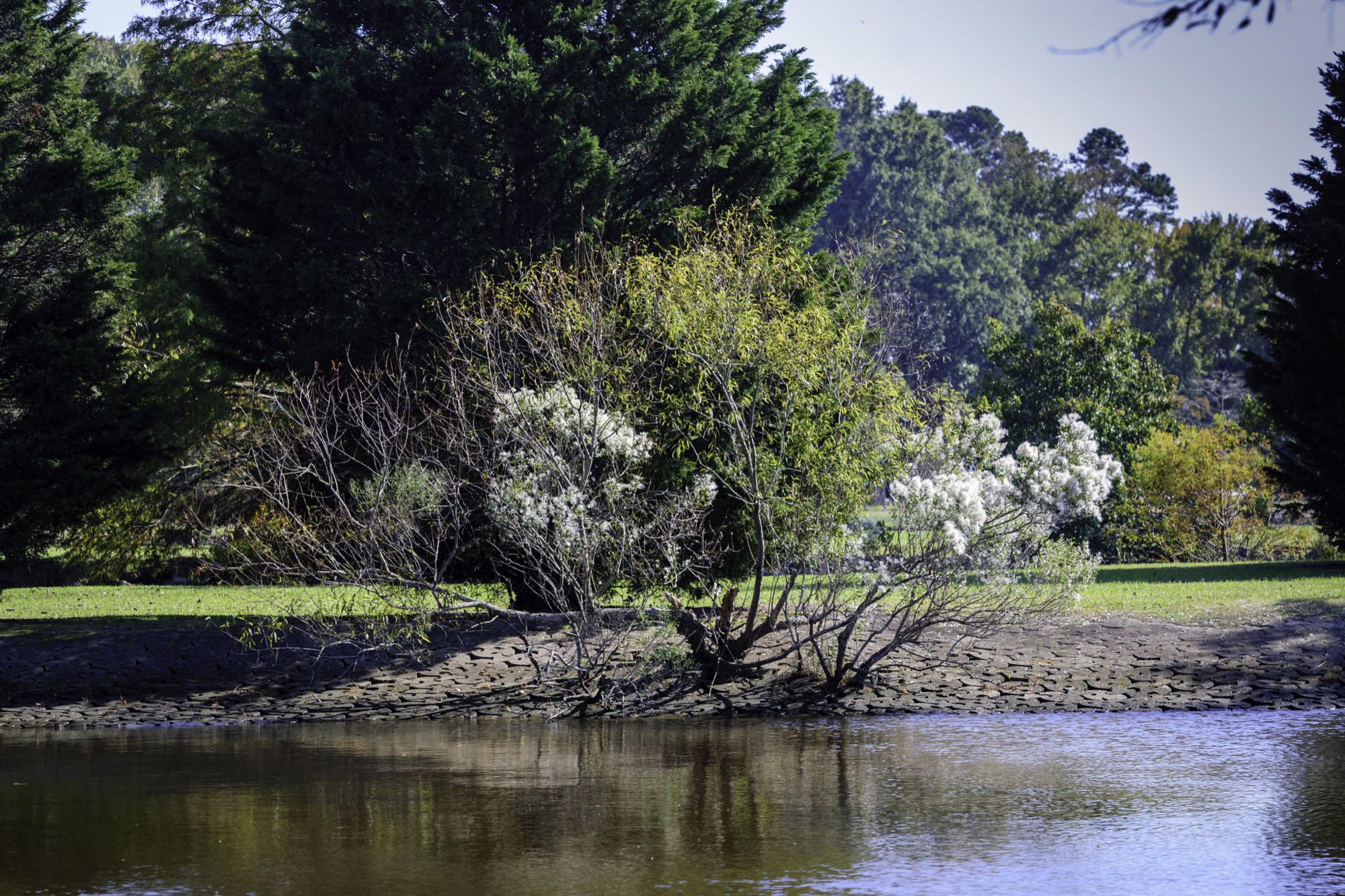
Photo Randy Everette, CC BY-SA 3.0
Kayak launchBoat rampMunden Point Park
Launch before sunrise — the grass line off the point holds bass until boat traffic picks up.
2 speciesAccessible features- No verified photo yet36.88° N 76.13° WShorelineKayak launch
Lake Smith & Lake Lawson
Reliable year-round freshwater — crappie stack up along the standing timber in spring.
2 speciesFamily-friendlyAccessible features - No verified photo yet37.18° N 76.55° WShorelineKayak launch
Lee Hall Reservoir
A 230-acre city-owned reservoir inside Newport News Park — electric-motor-only water with a well-documented, diverse fish population.
4 speciesFamily-friendlyAccessible features 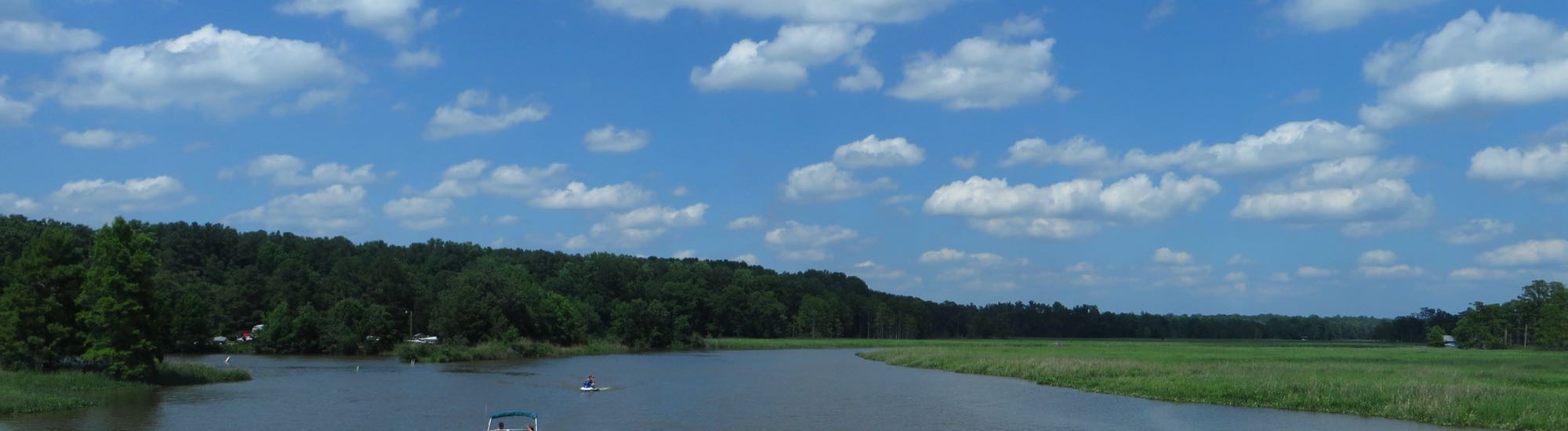
Photo Ken Lund, CC BY-SA 2.0
ShorelineKayak launchPowhatan Creek Park and Blueway
Five observation/fishing piers along a tidal creek near Jamestown Island, plus a non-motorized boat launch — open 24 hours.
3 speciesFamily-friendly- No verified photo yet36.75° N 76.63° WShorelineBoat ramp
Suffolk reservoir shoreline
Cypress-lined municipal reservoir water — quiet freshwater fishing with permit requirements and posted rules.
2 speciesFamily-friendly

