Crappie
Pomoxis spp. — also called speckled perch, papermouth
The papermouth panfish of standing timber, brush, and dock pilings in the reservoirs and slow rivers — a spring-spawn favourite on small jigs and minnows under a float.
Typically present
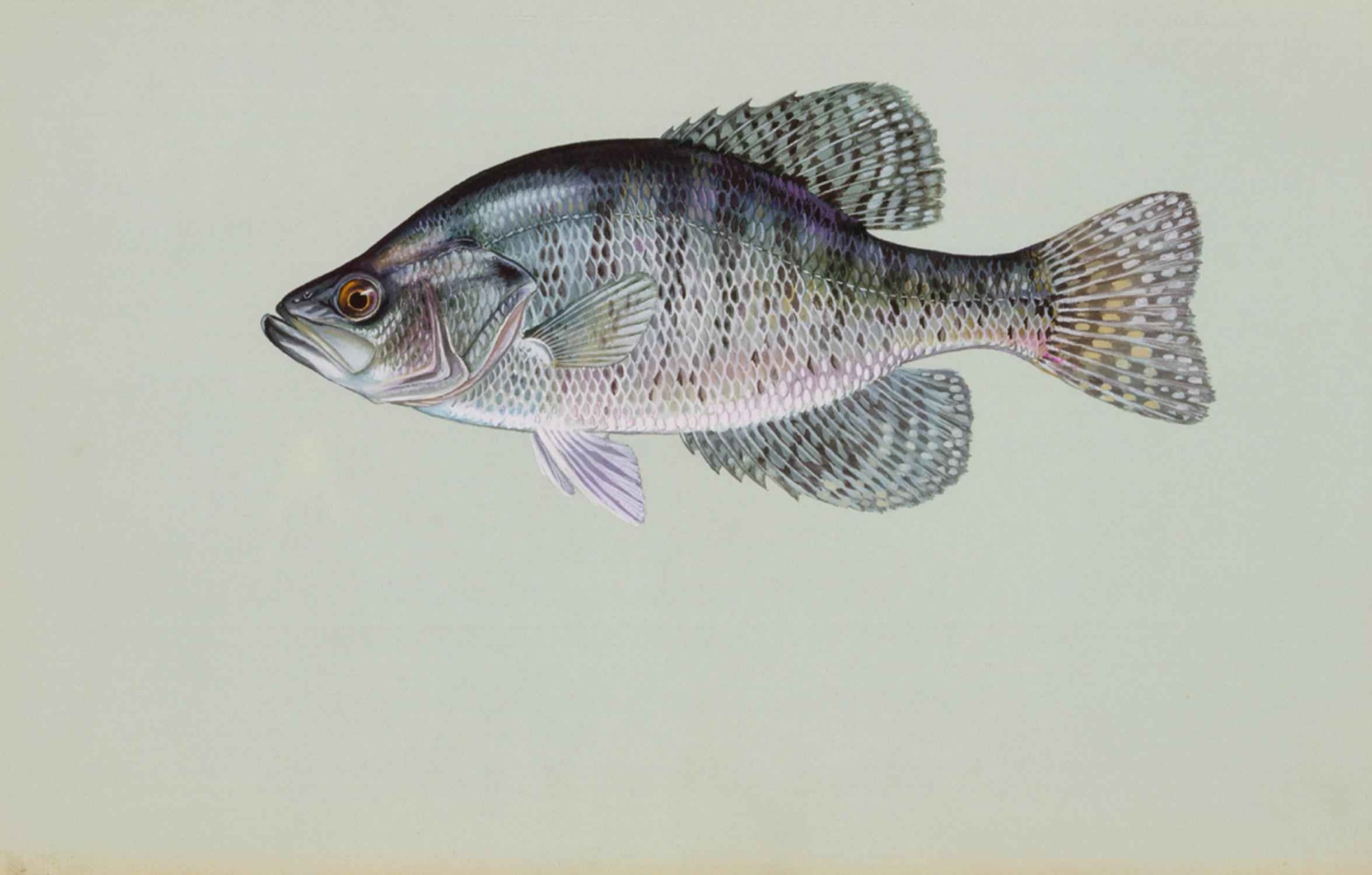
Illustration: Duane Raver / USFWS, U.S. Fish and Wildlife Service — Public domain
- Habitat
- Tidal rivers, Freshwater lakes
- Methods
- Freshwater, Shore
- Typical size
- 8–11 in
- Eating
- good
Identification
Look for
- Two species occur locally, both covered by this one entry: black crappie (deeper body, high arched back, randomly speckled sides, 7-8 dorsal spines) and white crappie (9 faint vertical bars, only 6 dorsal spines)
- Both have a large mouth and thin, papery, easily-torn lips — go easy on hookset and handling
- Typical size here
- 8–11 in
- Notable fish
- 'Slabs' past 14 in in the reservoirs
Local waters
- Standing timber, brush piles, and dock pilings
- Freshwater lakes and slow rivers
A shore fishery here — typically fished from bank/shore, no boat required. 3 spots in this guide document it — see water to try below.
When to fish
The spring spawn (shallow) is most popular; crappie suspend around structure the rest of the year.
Tide stage for this kind of water
Moving water at bends and creek mouths
From: Reading tides without overthinking themWater temperature
The water, not the calendar, sets the season here — a warm October or a cold snap moves these bands.
Water temperature and the seasonsHow to catch it
- A small minnow or a 1/16 oz jig under a slip float set to the depth the fish are holding beside timber, brush, or dock pilings.
- Move the float a foot at a time until you find the depth; crappie hold at one level and rarely come up for a bait.
Bait & lures
- Small minnows or jigs under a slip float
- 1/16–1/32 oz jigs fished around cover
Rigs for crappie
All rigs- Sheet 14Floatbeginner
Panfish float rig
For crappie, yellow perch, white perch, chain pickerel from lake, river, marsh.
CrappieYellow PerchWhite Perch - Sheet 08Floatbeginner
Slip-float rig
For speckled trout, red drum, crappie, white perch from bay, marsh, river, lake.
Speckled TroutRed DrumCrappie - Sheet 17Lureintermediate
Drop-shot rig
For largemouth bass, crappie, white perch from lake, river.
Largemouth BassCrappieWhite Perch
On the table
Sweet, delicate white panfish fillets — fried in cornmeal is the standard. Confirm current limits with DWR.
- Thin, papery lips tear easily — no heavy hookset, and lift with a net rather than the line.
Recipes written for it
Where to try
Water that suits crappie
- No verified photo yet36.88° N 76.13° WShorelineKayak launch
Lake Smith & Lake Lawson
Reliable year-round freshwater — crappie stack up along the standing timber in spring.
2 speciesFamily-friendlyAccessible features - No verified photo yet37.18° N 76.55° WShorelineKayak launch
Lee Hall Reservoir
A 230-acre city-owned reservoir inside Newport News Park — electric-motor-only water with a well-documented, diverse fish population.
4 speciesFamily-friendlyAccessible features 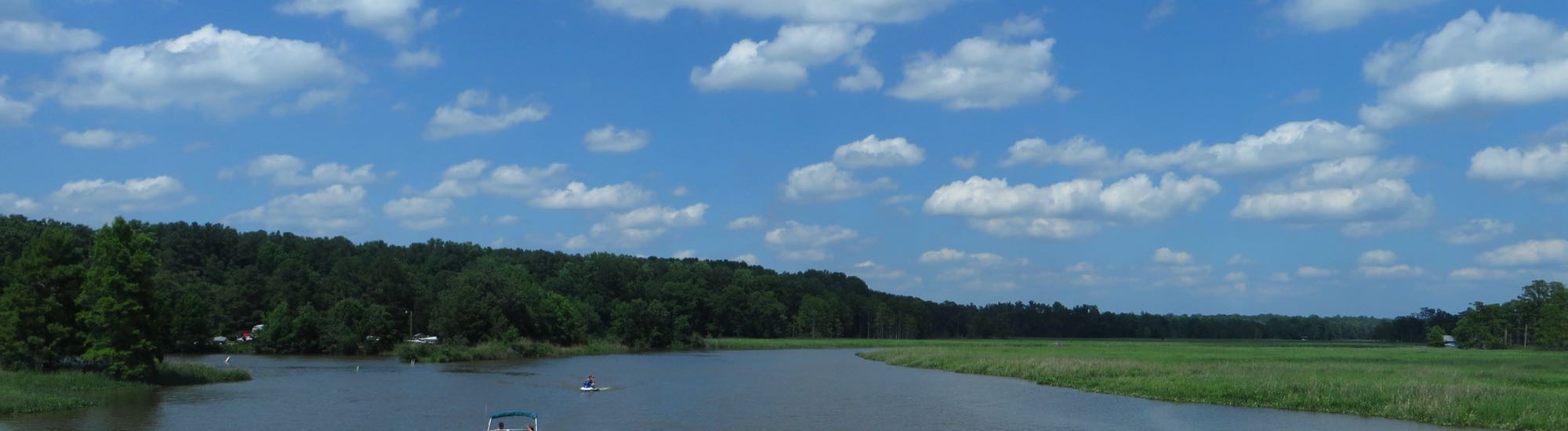
Photo Ken Lund, CC BY-SA 2.0
ShorelineKayak launchPowhatan Creek Park and Blueway
Five observation/fishing piers along a tidal creek near Jamestown Island, plus a non-motorized boat launch — open 24 hours.
3 speciesFamily-friendly- No verified photo yet36.75° N 76.63° WShorelineBoat rampHabitat match
Suffolk reservoir shoreline
Cypress-lined municipal reservoir water — quiet freshwater fishing with permit requirements and posted rules.
2 speciesFamily-friendly - No verified photo yet36.57° N 76.28° WShorelineKayak launchHabitat match
Northwest River Park
Cypress-lined blackwater — classic pickerel and bass water, quiet paddle in.
2 speciesFamily-friendlyAccessible features 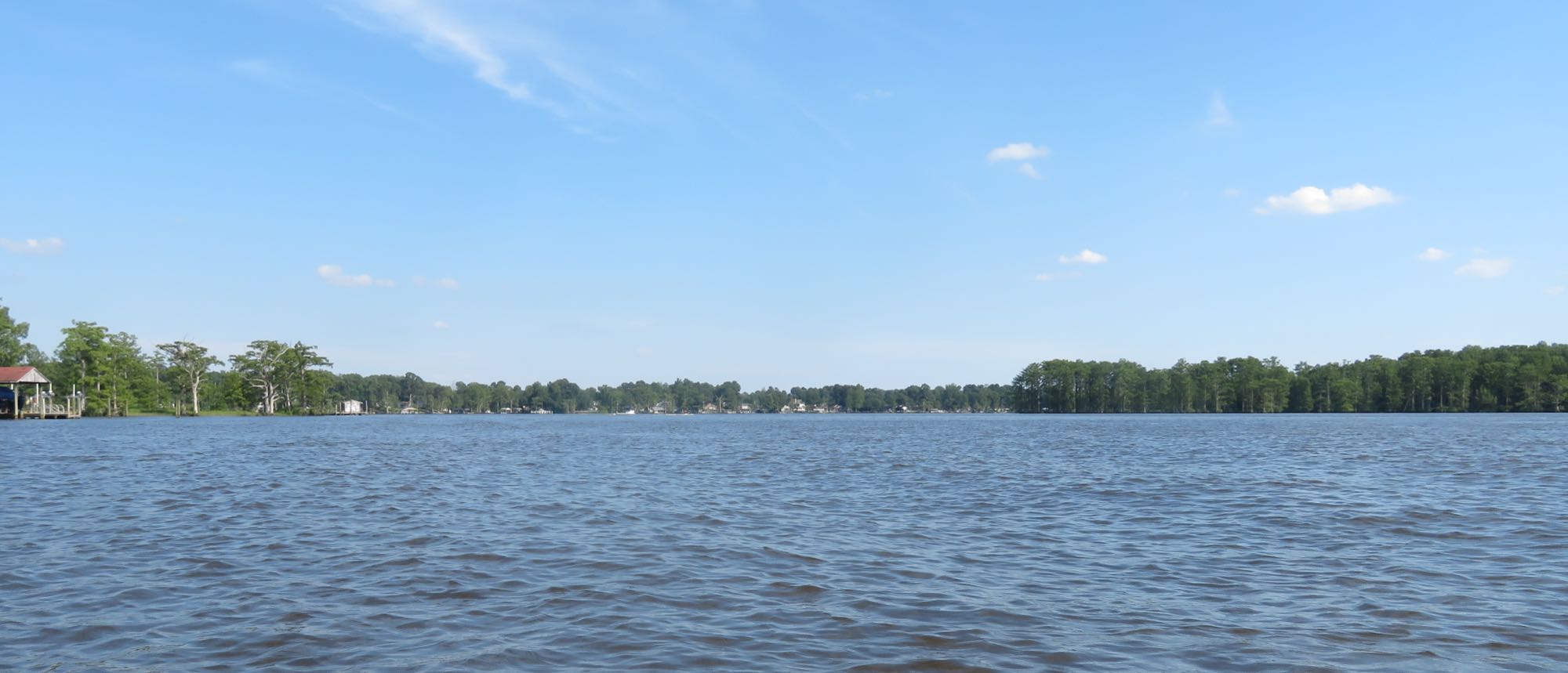
Photo David R. Bains, CC BY-SA 4.0 (representative)
ShorelineBoat rampHabitat matchChickahominy riverfront access
Tidal freshwater river with ramps, wide flats, and cypress shoreline — a strong bridge between fresh and brackish fishing.
3 speciesFamily-friendlyAccessible featuresRestrooms

