Cownose Ray
Rhinoptera bonasus
The schooling, two-lobed-snout ray that floods the Bay each late spring — often mistaken for a shark from above, and handled only with the spine in mind.
Typically present
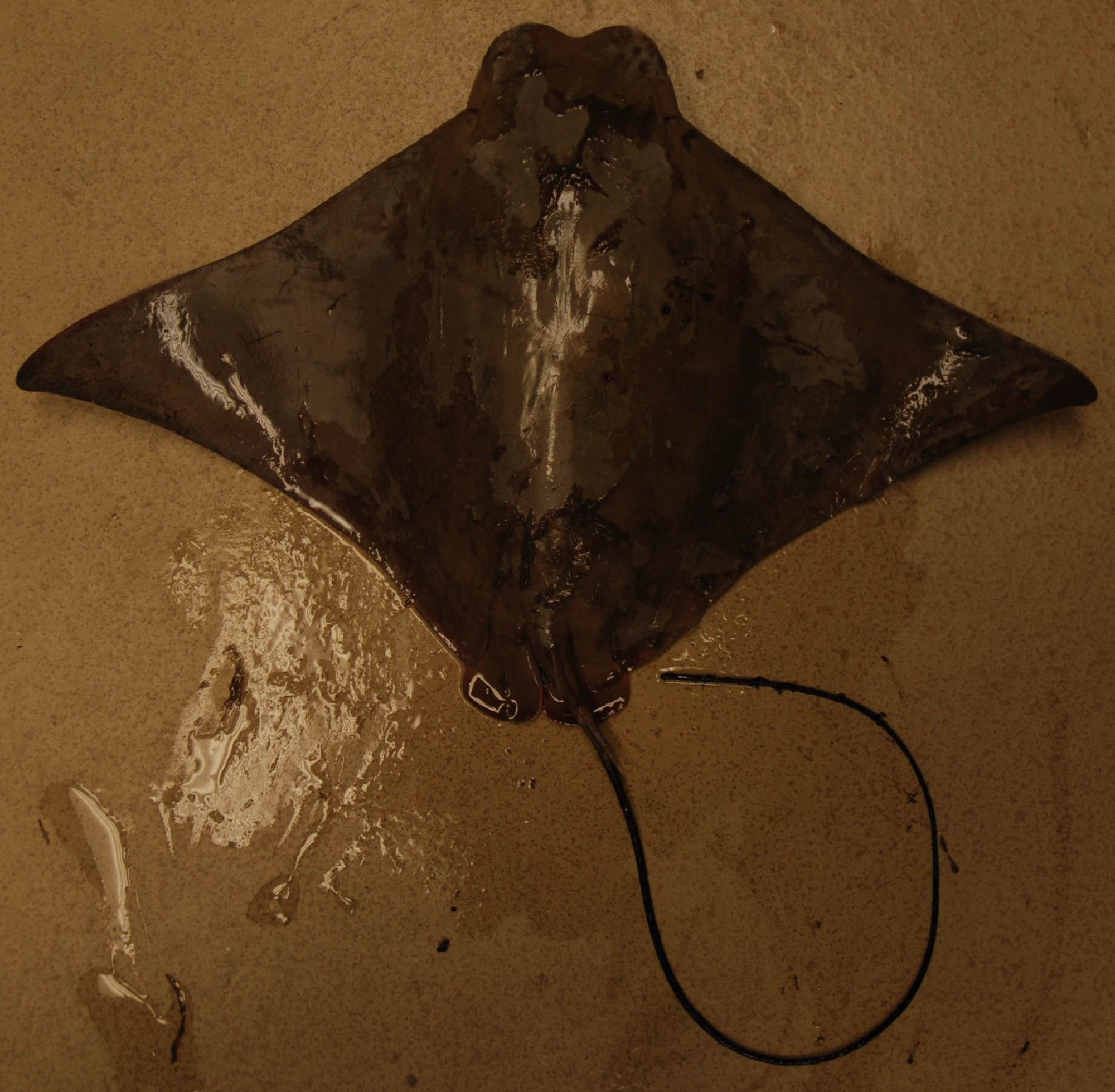
Photo: Robert Aguilar / Smithsonian Environmental Research Center, Smithsonian Environmental Research Center — CC BY 2.0
- Habitat
- Chesapeake Bay, Inshore waters
- Methods
- Inshore boat
- Difficulty
- intermediate
- Eating
- Usually released
Identification
Look for
- Distinctive indented, two-lobed ('cow-nosed') snout — the feature the common name comes from
- Pointed, angular pectoral fins ('wings') and a long, thin tail with a venomous barbed spine near the base
- Often seen in large migratory schools near the surface, unlike the more solitary, bottom-hugging southern stingray
Local waters
- Open Bay waters during migration
- Shallow flats near oyster beds
Primarily a boat fishery here — typically fished by inshore boat.
When to fish
Late spring through summer, when large migratory schools move into the Chesapeake Bay.
Tide stage for this kind of water
Rising water on the shallow flats
From: Reading tides without overthinking themWater temperature
The water, not the calendar, sets the season here — a warm October or a cold snap moves these bands.
Water temperature and the seasonsHow to catch it
Primarily a boat fishery here — typically fished by inshore boat. Technique notes for this species have not been written yet; the baits and rigs below are the documented starting points.
Bait & lures
- Cut bait or crab on bottom — often caught by anglers targeting other bottom species
Packing lists written for it
Handling and release
Not a food-use species in this guide (catch-and-release or restricted) — release.
- Has a venomous barbed tail spine like other rays — the same low-contact handling applies as southern stingray: avoid handling by hand where possible, cut the leader close to the hook rather than forcing removal if the hook isn't easily reached, and release in the water rather than on sand or a pier deck. Cownose rays were previously targeted in some Virginia harvest campaigns tied to a claimed oyster-bed impact; that framing has since been scientifically disputed, and this species is less abundant than once assumed. Treat any 'harvest encouraged' advice you find elsewhere as outdated unless you can confirm it's still current.
Where to try
