Mahi-Mahi (Dolphinfish)
Coryphaena hippurus — also called dorado, dolphin
The blue-and-gold dolphinfish of the summer weed lines and flotsam offshore — fast-growing, fast-biting, and excellent to eat.
Typically present
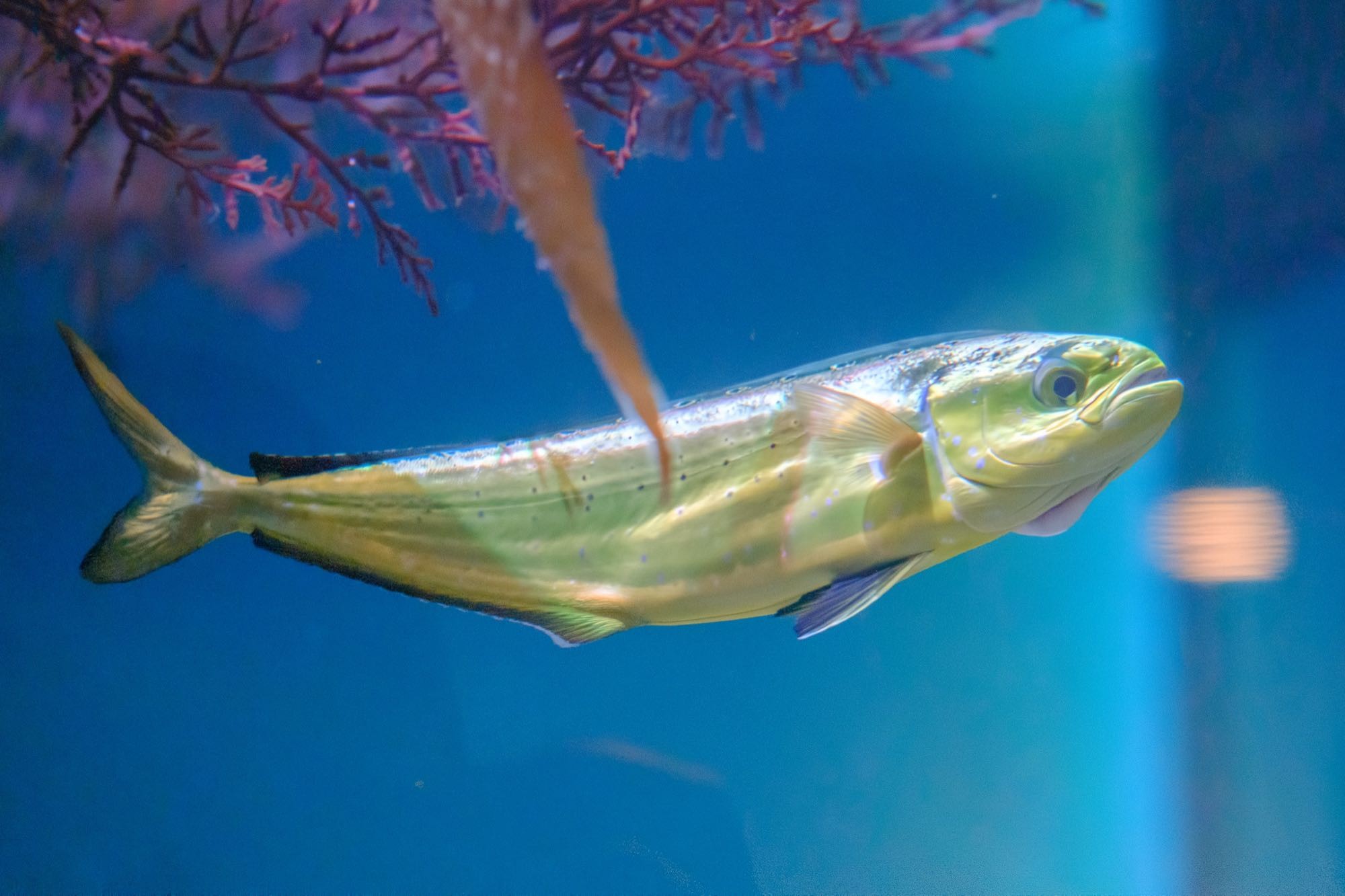
Photo: gendereuphorbia (via iNaturalist), Monterey Bay Aquarium Research Institute — CC0 1.0 Universal
- Habitat
- Offshore waters
- Methods
- Offshore
- Difficulty
- intermediate
- Eating
- good
Identification
Look for
- Blazing blue-green and gold colour that fades within minutes of landing; a long dorsal fin runs from the head to the tail
- Males ('bulls') have a high, square forehead; females ('cows') a rounded one
Local waters
- Blue water around sargassum weed lines and flotsam
- Warm offshore currents
Primarily a boat fishery here — typically fished by offshore boat.
When to fish
Summer, offshore around weed lines and floating debris.
Water temperature
The water, not the calendar, sets the season here — a warm October or a cold snap moves these bands.
Water temperature and the seasonsHow to catch it
Primarily a boat fishery here — typically fished by offshore boat. Technique notes for this species have not been written yet; the baits and rigs below are the documented starting points.
Bait & lures
- Trolled ballyhoo or skirted lures
- Live bait or jigs once a school is located under floating structure
On the table
Firm, mild, and sweet with large flakes — grilled, seared, or in tacos; among the best-eating fish offshore. Confirm current federal and VMRC limits.
- Managed federally under the Dolphin/Wahoo Fishery Management Plan, not the HMS program — unlike tuna, marlin, or sharks, private recreational anglers generally don't need an extra federal permit beyond a Virginia saltwater license, though for-hire/charter boats do.
Recipes written for it
Where to try
