Atlantic Bluefin Tuna
Thunnus thynnus
The winter giant of the offshore 'Tuna Hole' southeast of Rudee — a cold-weather, federally permitted fishery unlike any other tuna season here.
Typically present
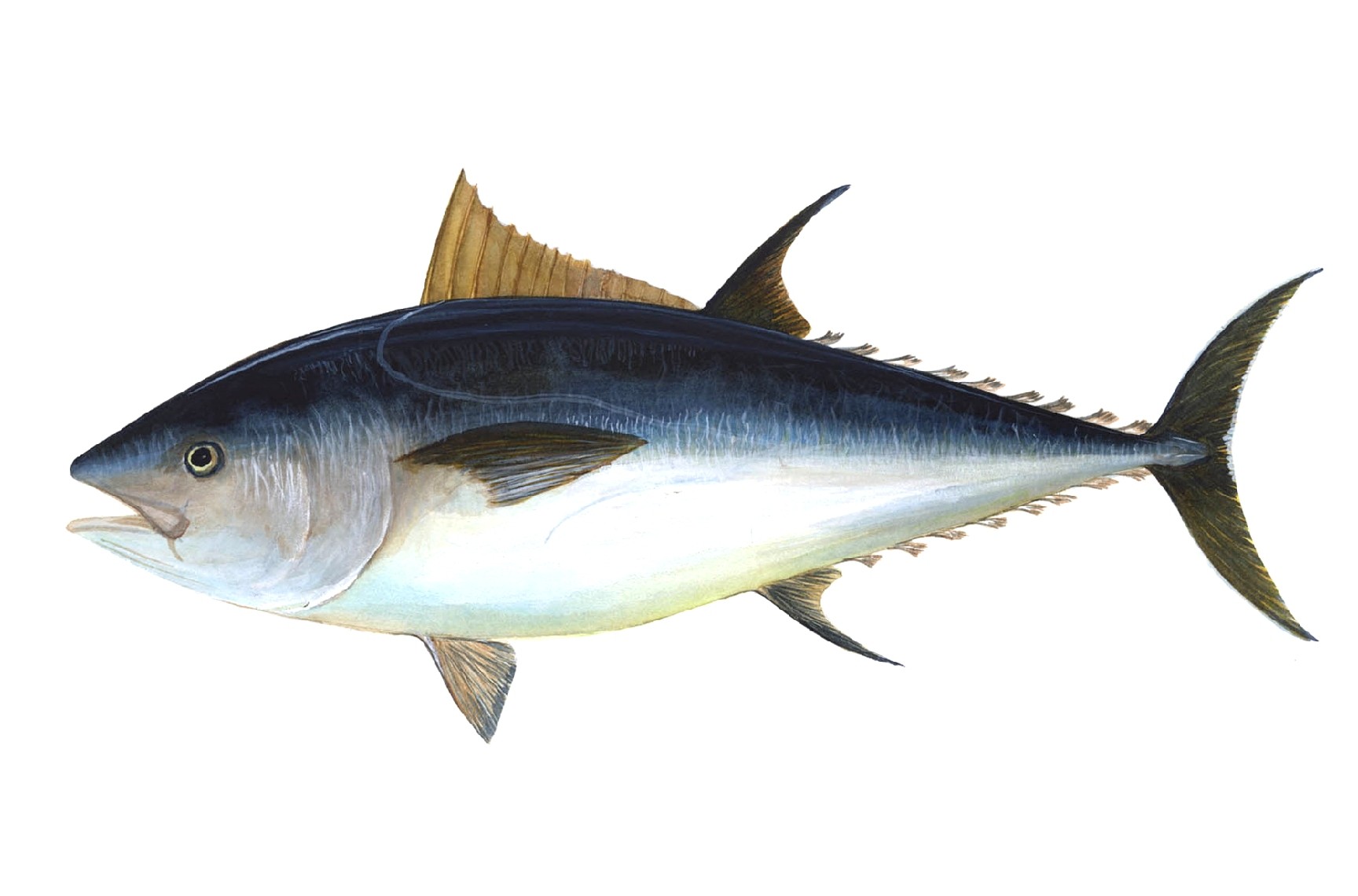
Illustration: NOAA Fisheries, National Oceanic and Atmospheric Administration — Public domain
- Habitat
- Offshore waters
- Methods
- Offshore
- Difficulty
- advanced
- Eating
- fair
Identification
Look for
- Heavy, deep body with short pectoral fins that do not reach the second dorsal fin — the quickest tell versus yellowfin and bigeye
- Dark blue-black back, silver sides, and short yellow finlets edged in black
Local waters
Deep offshore water, notably the winter grounds well southeast of the Virginia coast
Primarily a boat fishery here — typically fished by offshore boat.
When to fish
Winter into early spring off Virginia — the offshore "Tuna Hole" fishery southeast of Rudee Inlet is a distinctly cold-weather fishery, unlike most other tuna seasons.
Water temperature
The water, not the calendar, sets the season here — a warm October or a cold snap moves these bands.
Water temperature and the seasonsHow to catch it
Primarily a boat fishery here — typically fished by offshore boat. Technique notes for this species have not been written yet; the baits and rigs below are the documented starting points.
Bait & lures
- Trolled ballyhoo and skirted lures
- Live or chunk bait once a school is located
On the table
Eat with caution — check current Virginia fish consumption advisories for the specific waterbody before eating.
- Confirmed live as of 2026-08-09: recreational retention requires a federal HMS Angling or Charterboat/Headboat permit, with mandatory catch reporting within 24 hours of landing (HMS Permit Shop, the HMS Catch Reporting app, or NOAA's reporting phone line). Retention limits and minimum sizes are tiered by size class (school/large school/small medium/large medium/giant) and change by rule — always check the current NOAA HMS bluefin page before deciding whether a fish is legal to keep. Bluefin cannot be retained if a hammerhead shark is aboard or has been offloaded from the vessel. Not on the FDA/EPA's specific named 'Choices to Avoid' list the way shark/swordfish/king mackerel/tilefish are, but multiple independent health-advisory sources note bluefin's mercury levels run high for a large, long-lived apex predator — treated here as eat-with-caution rather than freely commonly-eaten, pending a clean primary FDA citation specific to bluefin.
Where to try
