Bull Shark
Carcharhinus leucas
A stocky, blunt-nosed shark that tolerates brackish water — rare this far north, but the one to keep in mind in the tidal rivers in summer.
Typically present
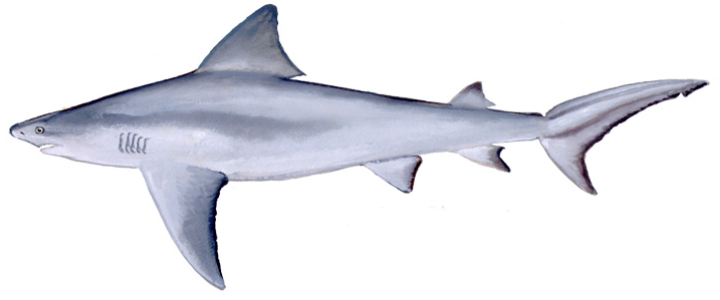
Illustration: Duane Raver / USFWS, U.S. Fish and Wildlife Service — Public domainLong edge is 720px, below this project's 1600px preference. Accepted because it is the best rights-clear, correctly-identified photo found for this species — see SPECIES_PHOTO_AUDIT.md for the source search record.
- Habitat
- Inshore waters, Tidal rivers
- Methods
- Inshore boat, Shore, Kayak
- Difficulty
- advanced
- Eating
- fair
Identification
Look for
- Large, triangular, rearward-sloping first dorsal fin originating over or slightly behind the pectoral fin base
- Short, blunt, rounded snout relative to a wide mouth — a notably stockier build than most other large coastal sharks
- No interdorsal ridge (shared with spinner shark, but bull shark's stockier body and blunter snout distinguish the two)
Local waters
- Shallow coastal waters
- Lagoons, bays, and river mouths — highly salinity-tolerant and known to enter far into fresh water elsewhere in its range
Catchable both from shore (shore) and by boat (inshore boat, kayak).
When to fish
Warmer months; rare north of Delaware, so a genuinely uncommon Hampton Roads catch rather than a reliable target.
Tide stage for this kind of water
Rising water on the flats
From: Reading tides without overthinking themWater temperature
The water, not the calendar, sets the season here — a warm October or a cold snap moves these bands.
Water temperature and the seasonsHow to catch it
Catchable both from shore (shore) and by boat (inshore boat, kayak). Technique notes for this species have not been written yet; the baits and rigs below are the documented starting points.
Bait & lures
- Cut or live bait on a wire or heavy leader — not a species this guide encourages beginners to specifically target given the safety/permit stakes
Rigs for bull shark
All rigsOn the table
Eat with caution — check current Virginia fish consumption advisories for the specific waterbody before eating.
- Regionally uncommon but real safety-awareness relevance given this species' documented brackish/tidal-river tolerance elsewhere in its range — treat any shark encounter in Hampton Roads' tidal rivers with appropriate caution rather than assuming sharks are strictly an ocean/inlet species. Managed under the same federal 'large coastal shark' recreational category as sandbar and dusky shark: 54-inch fork-length minimum, 1 shark/vessel/trip (combined with the other species in that category) as of the last confirmed check. Recreational anglers must hold a federal HMS Angling or Charterboat/Headboat permit *with a shark endorsement* to legally retain any shark species at all — most anglers fishing without one must release every shark regardless of that species' individual status, and Virginia (VMRC) rules may add further restrictions on top of federal ones. Anyone targeting sharks (from shore or a vessel) is also federally required to carry a device capable of quickly cutting the leader or hook. If removing the hook would delay release, cut the leader or hook as close to the hook as possible instead — the shark does not need to be lifted, dragged onto dry sand/a pier deck, or restrained to be released safely, and a shark should stay in the water throughout release whenever that's achievable.
Where to try
Water that suits bull shark
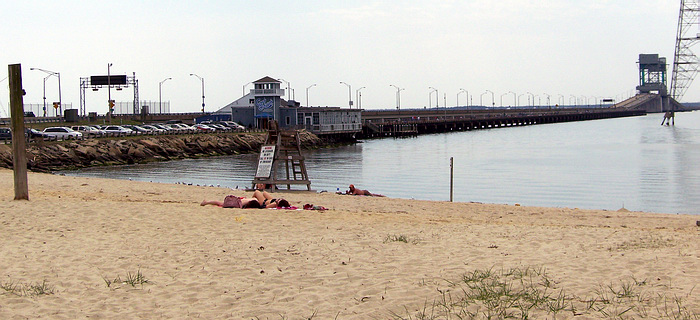
Photo Mytwocents, CC BY-SA 3.0
Fishing pierShorelineHabitat matchJames River pier & shoreline
Long tidal-river pier reaching out over deep water, mixing saltwater panfish with tidal-river species.
5 speciesFamily-friendlyAccessible featuresRestrooms- No verified photo yet37.11° N 76.32° WKayak launchShorelineHabitat match
Poquoson marsh kayak launch
Quiet grass-and-creek country for paddlers — shallow water, oyster bars, and very little boat pressure.
4 speciesFamily-friendly - No verified photo yet36.82° N 76.29° WShorelineParkHabitat match
Portsmouth city park shoreline
Urban tidal-river access with parking, restrooms, and level ground — a practical after-work or with-kids option.
4 speciesFamily-friendlyAccessible featuresRestrooms - No verified photo yet36.57° N 76.28° WShorelineKayak launchHabitat match
Northwest River Park
Cypress-lined blackwater — classic pickerel and bass water, quiet paddle in.
2 speciesFamily-friendlyAccessible features 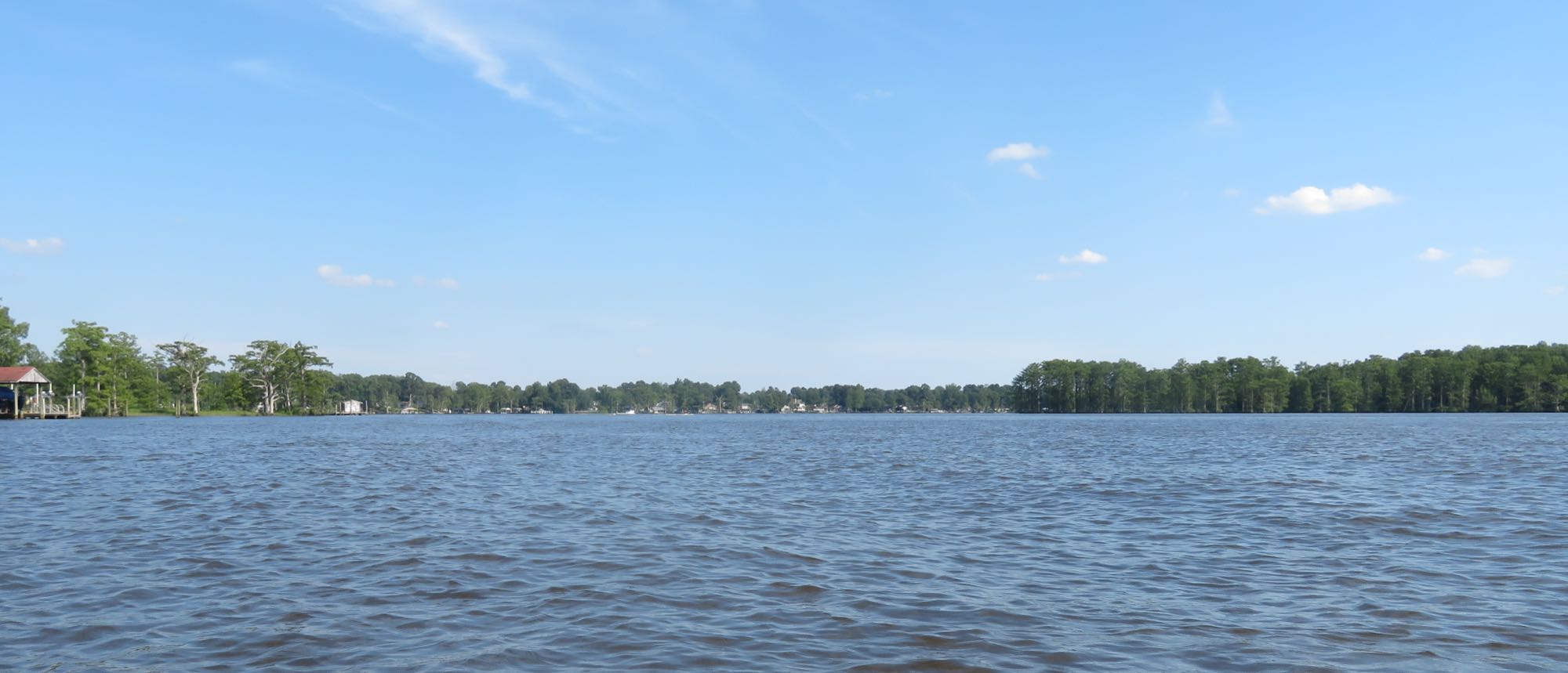
Photo David R. Bains, CC BY-SA 4.0 (representative)
ShorelineBoat rampHabitat matchChickahominy riverfront access
Tidal freshwater river with ramps, wide flats, and cypress shoreline — a strong bridge between fresh and brackish fishing.
3 speciesFamily-friendlyAccessible featuresRestrooms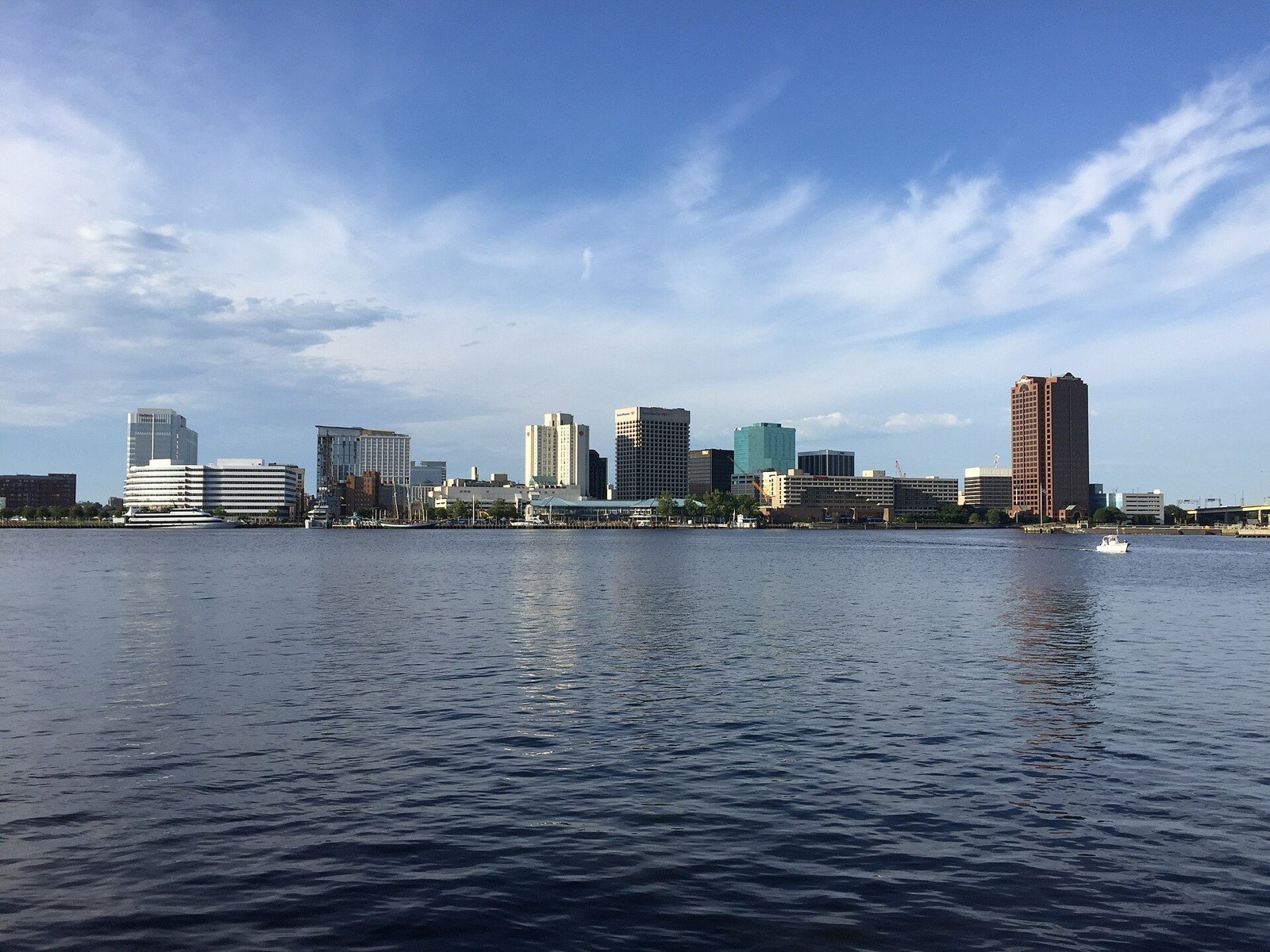
Photo Antony-22, CC BY-SA 4.0 (representative)
ShorelineKayak launchHabitat matchElizabeth River — Downtown Norfolk
Urban stripers around the piers and bridge pilings, best on the spring and fall runs.
2 speciesAccessible features


