Swordfish
Xiphias gladius
The deep-drop billfish of the offshore canyons — a growing daytime Virginia fishery a thousand feet down, under federal permit.
Typically present
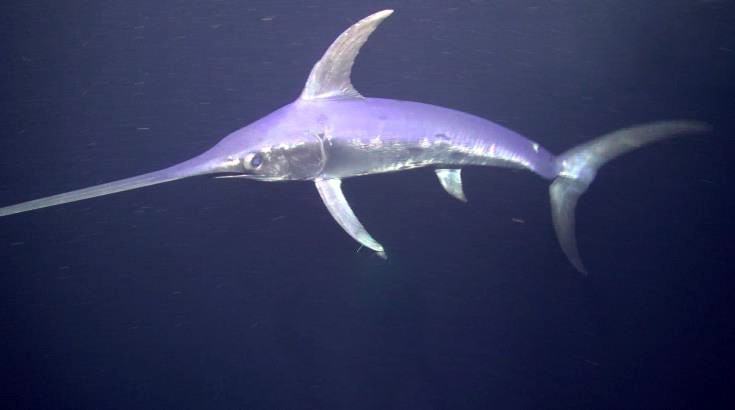
Photo: NOAA Deep Sea Coral Research & Technology Program / Pelagic Research Services, National Oceanic and Atmospheric Administration — Public domainLong edge is 735px, below this project's 1600px preference. Accepted because it is the best rights-clear, correctly-identified photo found for this species — see SPECIES_PHOTO_AUDIT.md for the source search record.
- Habitat
- Offshore waters
- Methods
- Offshore
- Difficulty
- advanced
- Eating
- fair
Identification
Look for
- A long, flat, sword-like bill with no scales on the adult body and no pelvic fins
- Huge eyes and a tall, crescent first dorsal fin; brown-black above, lighter below
Local waters
Deep offshore canyon edges, often 1,000+ feet down
Primarily a boat fishery here — typically fished by offshore boat.
When to fish
Year-round where conditions allow, targeted by daytime deep-dropping in deep offshore canyon water — a real, growing Virginia fishery, not just a nighttime-drift species here.
Water temperature
The water, not the calendar, sets the season here — a warm October or a cold snap moves these bands.
Water temperature and the seasonsHow to catch it
Primarily a boat fishery here — typically fished by offshore boat. Technique notes for this species have not been written yet; the baits and rigs below are the documented starting points.
Bait & lures
- Daytime deep-dropped rigged squid or bait, fished with lights and heavy weight to reach depth
On the table
Eat with caution — check current Virginia fish consumption advisories for the specific waterbody before eating.
- Confirmed live as of 2026-08-09: recreational retention requires a federal HMS Angling or Charterboat/Headboat permit, with a 47" lower-jaw-fork-length minimum. Swordfish is named on the FDA/EPA joint 'Choices to Avoid' (highest-mercury) list alongside shark, king mackerel, and tilefish — this project couldn't get a clean direct fetch of the current live FDA chart (repeated 403/404s on other species pages' checks), but this is corroborated consistently across multiple independent sources describing the same stable, years-old joint advisory. Pregnant/nursing people and young children should avoid it; everyone else should eat it only occasionally.
Where to try
