Winter Skate
Leucoraja ocellata
The larger, white-bellied skate with eyespots on its wings, on the inshore bottom from fall through spring — released.
Typically present
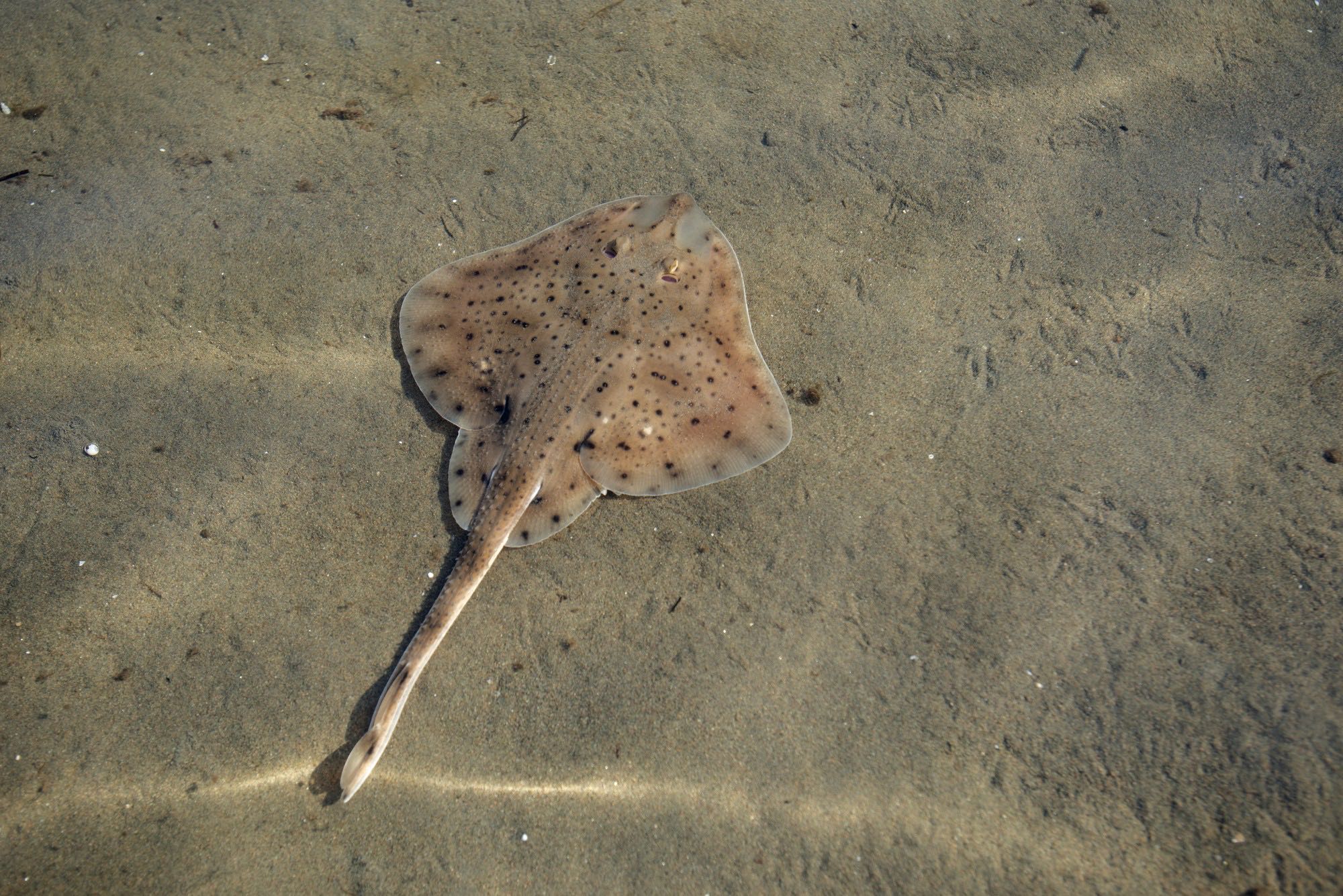
Photo: Charles LeGresley — CC BY-SA 4.0
- Habitat
- Inshore waters
- Methods
- Inshore boat
- Difficulty
- beginner
- Eating
- Usually released
Identification
Look for
- White eyespots toward the rear of the pectoral fins — NOAA's own stated best quick field mark separating it from little skate
- Underside of the wings is white (little skate's underside is plain)
- Light brown with small dark spots and small spines across most of the back
- Larger maximum size than little skate — up to about 46", versus little skate's 22"
Local waters
Sandy/muddy inshore and nearshore bottom
Primarily a boat fishery here — typically fished by inshore boat.
When to fish
Most active in cooler months — documented in inshore waters between the Chesapeake Bay and the New York/New Jersey coast roughly October through early June.
Tide stage for this kind of water
Rising water on the flats
From: Reading tides without overthinking themWater temperature
The water, not the calendar, sets the season here — a warm October or a cold snap moves these bands.
Water temperature and the seasonsHow to catch it
Primarily a boat fishery here — typically fished by inshore boat. Technique notes for this species have not been written yet; the baits and rigs below are the documented starting points.
Bait & lures
- Cut bait fished on bottom — almost always an incidental catch while bottom fishing for other species
Handling and release
Not a food-use species in this guide (catch-and-release or restricted) — release.
- One of seven species in NOAA's Northeast Skate Complex management group, alongside the already-published clearnose skate and little skate. No recreational possession restrictions currently apply in federal waters (per NOAA's own current guidance), though a general saltwater fishing license and state minimum-size rules where applicable still apply. Not a stinging species, but still handle with care — support the body rather than gripping near the tail, and release promptly if not being kept.