Sand Tiger Shark
Carcharias taurus
A ragged-toothed, docile shark that rests near nearshore wrecks in summer — prohibited to keep in any form since 1997, so an incidental hook-up is released in the water.
Typically present
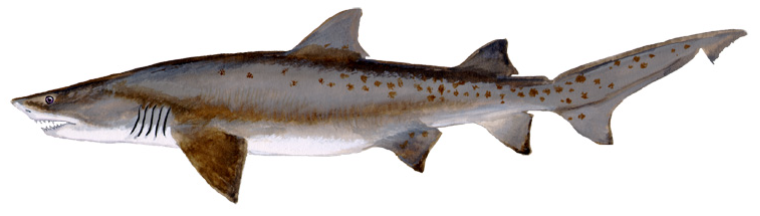
Illustration: Duane Raver / USFWS, U.S. Fish and Wildlife Service — Public domainLong edge is 760px, below this project's 1600px preference. Accepted because it is the best rights-clear, correctly-identified photo found for this species — see SPECIES_PHOTO_AUDIT.md for the source search record.
- Habitat
- Offshore waters, Atlantic surf
- Methods
- Surf, Pier, Shore
- Difficulty
- advanced
- Eating
- Usually released
Identification
Look for
- Flattened, pointed snout with prominent needle-like teeth visible even with the mouth closed — a fearsome look this species' actual docile temperament doesn't match
- Gray to light brown above, grayish-white below; grows to roughly 10.5 feet
- Frequently seen resting near the bottom around wrecks — a real identification/temperament distinction from more active pelagic sharks
Local waters
- Nearshore wrecks and structure
- Surf zone to shallow bays to outer continental shelf
Catchable both from shore (surf, pier) and by boat (inshore boat, offshore boat).
When to fish
Warmer months, frequently around nearshore wrecks and structure off the Virginia coast.
Tide stage for this kind of water
Rising through high, and the first of the fall
From: Reading the surfWater temperature
The water, not the calendar, sets the season here — a warm October or a cold snap moves these bands.
Water temperature and the seasonsHow to catch it
Catchable both from shore (surf, pier) and by boat (inshore boat, offshore boat). Technique notes for this species have not been written yet; the baits and rigs below are the documented starting points.
Bait & lures
- Not a deliberate rod-and-reel target for retention — a docile species frequently encountered by divers; an incidental hook-up must be released
Rigs for sand tiger shark
All rigsHandling and release
Not a food-use species in this guide (catch-and-release or restricted) — release.
- Prohibited species since 1997 — retention of the whole fish or any part (fins, meat, jaws, teeth) is illegal on the Atlantic coast; release with minimal injury and without removing the fish from the water. Its intimidating teeth lead to real misidentification risk against more dangerous species — sand tiger sharks are a generally docile, slow-moving species and not considered a significant threat to divers/swimmers under normal circumstances, but a prohibited species is a prohibited species regardless of temperament. Recreational anglers must hold a federal HMS Angling or Charterboat/Headboat permit *with a shark endorsement* to legally retain any shark species at all — most anglers fishing without one must release every shark regardless of that species' individual status, and Virginia (VMRC) rules may add further restrictions on top of federal ones. Anyone targeting sharks (from shore or a vessel) is also federally required to carry a device capable of quickly cutting the leader or hook. If removing the hook would delay release, cut the leader or hook as close to the hook as possible instead — the shark does not need to be lifted, dragged onto dry sand/a pier deck, or restrained to be released safely, and a shark should stay in the water throughout release whenever that's achievable.
Where to try
Water that suits sand tiger shark
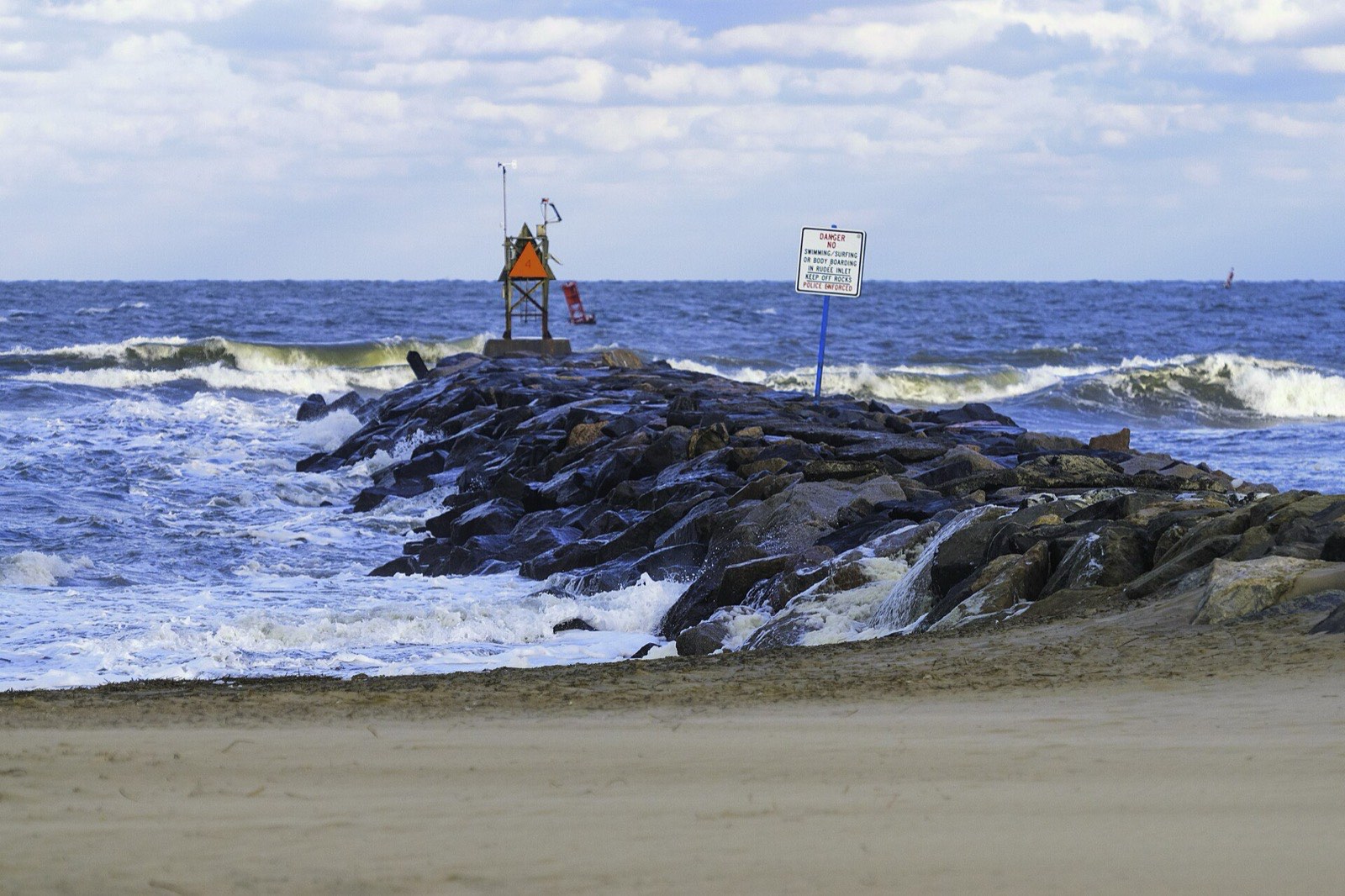
Photo PumpkinSky, CC BY-SA 3.0
ShorelineBeachHabitat matchRudee Inlet jetty & shoreline
Hard structure meeting ocean current — a technical spot that rewards anglers who read moving water.
6 speciesRestrooms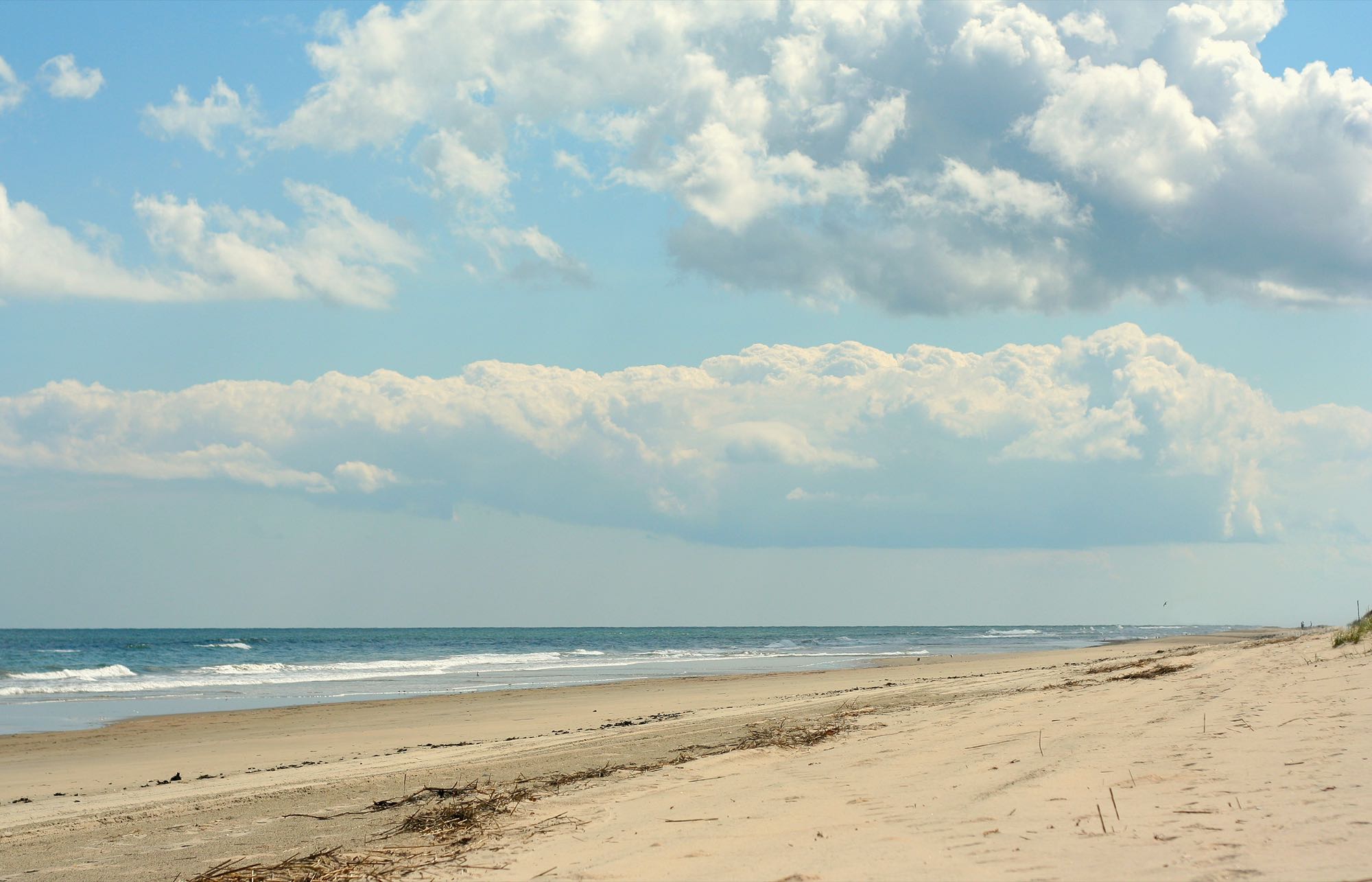
Photo Brent Hoard, CC BY 2.0
BeachHabitat matchSandbridge Beach surf
Open Atlantic beach with sandbars, troughs, and cuts — classic surf fishing with plenty of room to spread out.
4 speciesFamily-friendlyRestrooms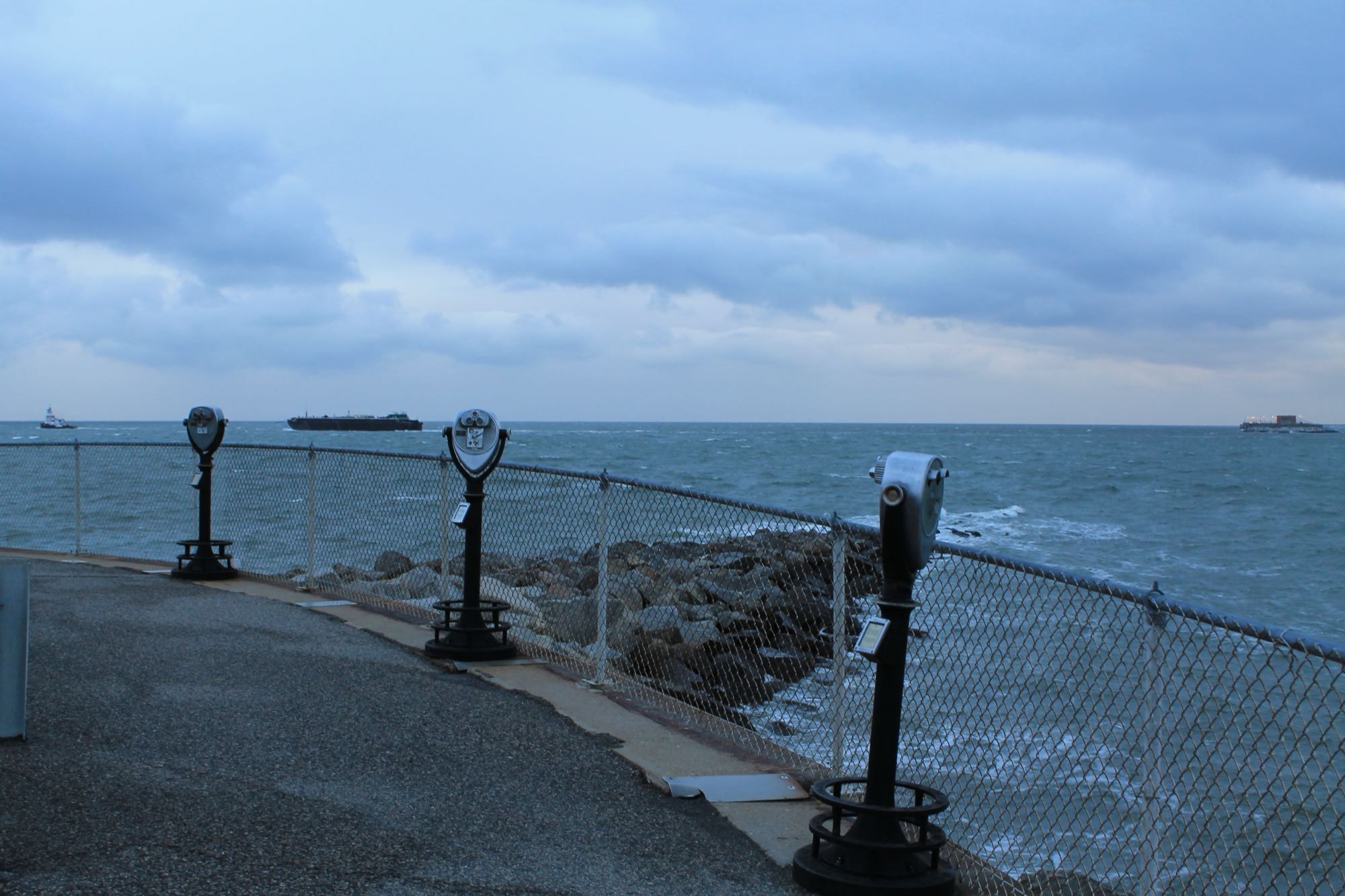
Photo Patrick Nouhailler, CC BY-SA 2.0 (representative)
Boat rampHabitat matchBay-mouth bridge structure (boat)
Miles of pilings, rubble, and channel edges at the Bay mouth — the region's premier structure fishery, boat access only.
6 species- No verified photo yet37.11° N 76.32° WKayak launchShorelineHabitat match
Poquoson marsh kayak launch
Quiet grass-and-creek country for paddlers — shallow water, oyster bars, and very little boat pressure.
4 speciesFamily-friendly


