Atlantic Bonito
Sarda sarda
A striped, true bonito that shows up with the fall false-albacore runs near shore — a fast light-tackle fish that eats better smoked than most expect.
Typically present
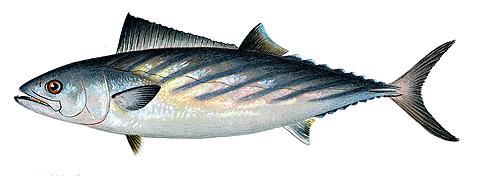
Illustration: Sherman Foote Denton / NY Forest, Fish & Game Commission, New York Forest, Fish and Game Commission — Public domainLong edge is 481px, below this project's 1600px preference. Accepted because it is the best rights-clear, correctly-identified photo found for this species — see SPECIES_PHOTO_AUDIT.md for the source search record.
- Habitat
- Offshore waters
- Methods
- Inshore boat, Offshore
- Difficulty
- intermediate
- Eating
- good
Identification
Look for
- Diagonal dark stripes running down the back — angled steeply, unlike the roughly horizontal striping of the (rarer, more southern) striped bonito
- Fully scaled body and a noticeably curved lateral line
- 6–8 finlets between the second dorsal/anal fins and the tail
Local waters
Nearshore and offshore coastal waters, often near bait schools
Primarily a boat fishery here — typically fished by inshore boat, offshore boat.
When to fish
A seasonal nearshore/offshore visitor, often mixed in with false albacore runs — general regional knowledge, not an individually confirmed local season.
Water temperature
The water, not the calendar, sets the season here — a warm October or a cold snap moves these bands.
Water temperature and the seasonsHow to catch it
Primarily a boat fishery here — typically fished by inshore boat, offshore boat. Technique notes for this species have not been written yet; the baits and rigs below are the documented starting points.
Bait & lures
- Small trolled spoons or feathers
- Live or cut bait around visible bait schools
On the table
Commonly eaten — always confirm current legal size/possession limits with VMRC or DWR before keeping.
- A true bonito, not a small tuna — genuinely eaten (often smoked or grilled) but with darker, stronger-flavored flesh than tuna; many anglers still prefer other species for the table. No Atlantic-HMS permit or federal tuna-specific rule applies to this species; a standard Virginia saltwater fishing license covers it.
Where to try
