Sailfish
Istiophorus platypterus
A summer canyon billfish with the unmistakable sail — less common than white marlin here, and released.
Typically present
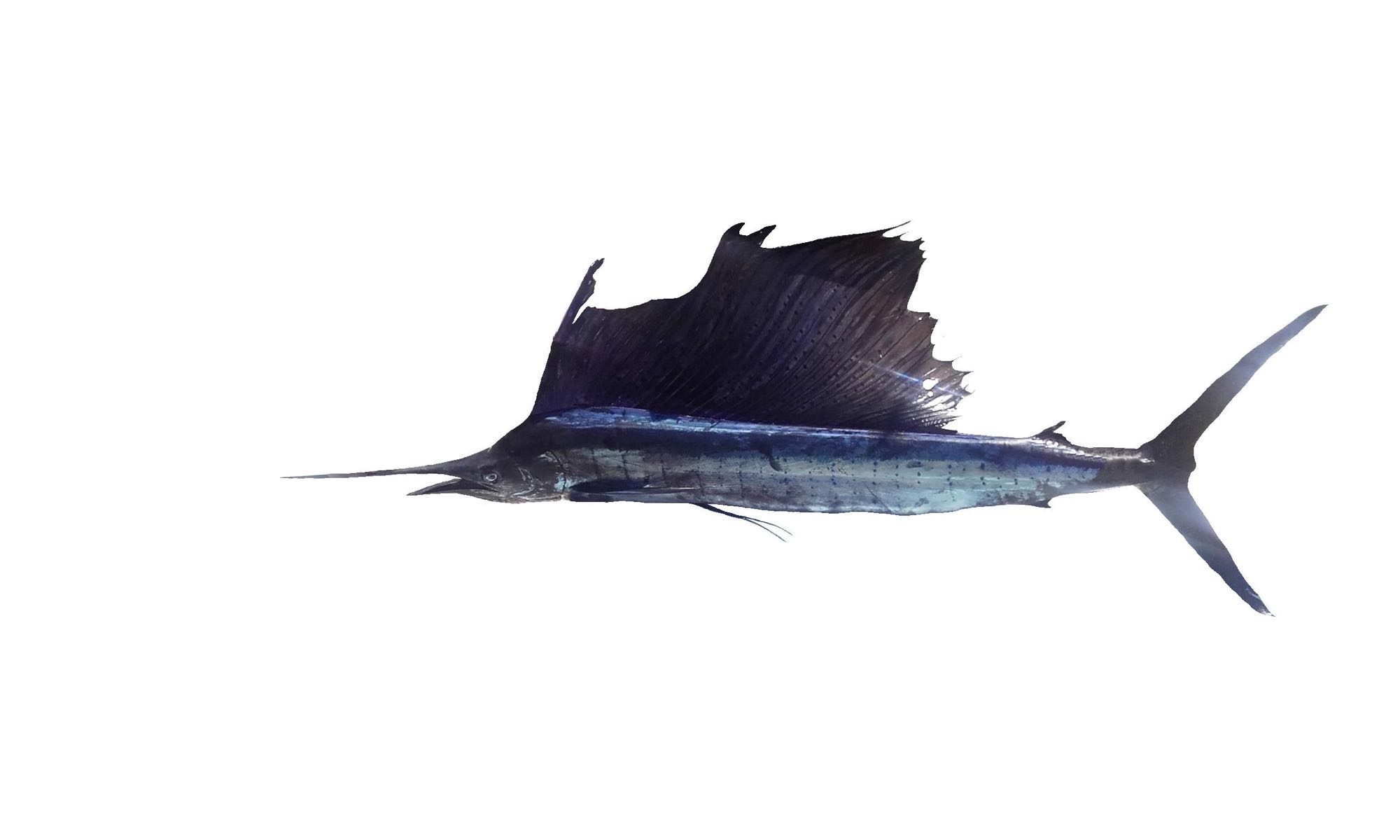
Photo: Fanchon Varenne / Ifremer — CC BY 4.0
- Habitat
- Offshore waters
- Methods
- Offshore
- Difficulty
- advanced
- Eating
- Usually released
Identification
Look for
- Long, sail-like dorsal fin running nearly the length of the back — the single most distinctive field mark
- Very long, thin, spear-like bill
- Vertical rows of pale blue spots/bars along the sides
- Dark blue back fading to silvery-white below
Local waters
Deep blue-water canyons and Gulf Stream current edges offshore
Primarily a boat fishery here — typically fished by offshore boat.
When to fish
Summer offshore, in the same Gulf Stream canyon waters worked by the region's marlin fishery — a real but less common catch than white marlin.
Water temperature
The water, not the calendar, sets the season here — a warm October or a cold snap moves these bands.
Water temperature and the seasonsHow to catch it
Primarily a boat fishery here — typically fished by offshore boat. Technique notes for this species have not been written yet; the baits and rigs below are the documented starting points.
Bait & lures
- Trolled small skirted lures and rigged ballyhoo, similar spreads to white marlin
Handling and release
Not a food-use species in this guide (catch-and-release or restricted) — release.
- Federally confirmed as of 2026-08-18: minimum retention size is 63" lower-jaw fork length. Billfish (including sailfish) cannot be retained if a hammerhead or oceanic whitetip shark is already aboard or has been offloaded from the vessel that trip. Retaining one legally requires a federal HMS Angling or Charterboat/Headboat permit; the overwhelming majority caught recreationally in this region are released rather than retained.
Where to try
