Blue Marlin
Makaira nigricans
The marquee summer billfish of the Mid-Atlantic canyons — nearly always released, and fished under federal size and reporting rules.
Typically present
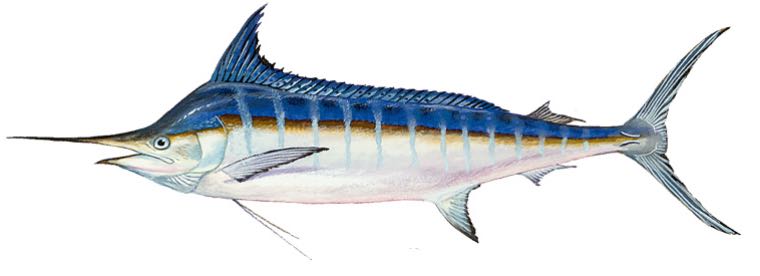
Illustration: Duane Raver / USFWS, U.S. Fish and Wildlife Service — Public domainLong edge is 760px, below this project's 1600px preference. Accepted because it is the best rights-clear, correctly-identified photo found for this species — see SPECIES_PHOTO_AUDIT.md for the source search record.
- Habitat
- Offshore waters
- Methods
- Offshore
- Difficulty
- advanced
- Eating
- Usually released
Identification
Look for
- Cobalt-blue back and silver-white belly with pale blue vertical bars; a long, heavy, rounded bill
- The first dorsal fin is pointed and shorter than the body depth — a white marlin's is rounded and taller
Local waters
Deep blue water canyons and current edges offshore
Primarily a boat fishery here — typically fished by offshore boat.
When to fish
Summer, in the offshore canyons — the marquee Mid-Atlantic billfish season.
Water temperature
The water, not the calendar, sets the season here — a warm October or a cold snap moves these bands.
Water temperature and the seasonsHow to catch it
Primarily a boat fishery here — typically fished by offshore boat. Technique notes for this species have not been written yet; the baits and rigs below are the documented starting points.
Bait & lures
- Trolled large skirted lures and rigged ballyhoo
Handling and release
Not a food-use species in this guide (catch-and-release or restricted) — release.
- Federally confirmed as of 2026-08-08: minimum retention size is 99" lower-jaw fork length, and blue marlin, white marlin, and roundscale spearfish together are capped at a combined 250 fish landed nationwide per year — in practice, the overwhelming majority of blue marlin caught recreationally are released, which is why this entry defaults to catch-and-release rather than 'commonly eaten.' Retaining one legally requires a federal HMS Angling or Charterboat/Headboat permit, and billfish cannot be retained if a hammerhead or oceanic whitetip shark is already aboard.
Where to try
