Bigeye Tuna
Thunnus obesus
The deep-diving canyon tuna with the big eyes and black-edged finlets — a permit-required offshore catch alongside yellowfin.
Typically present
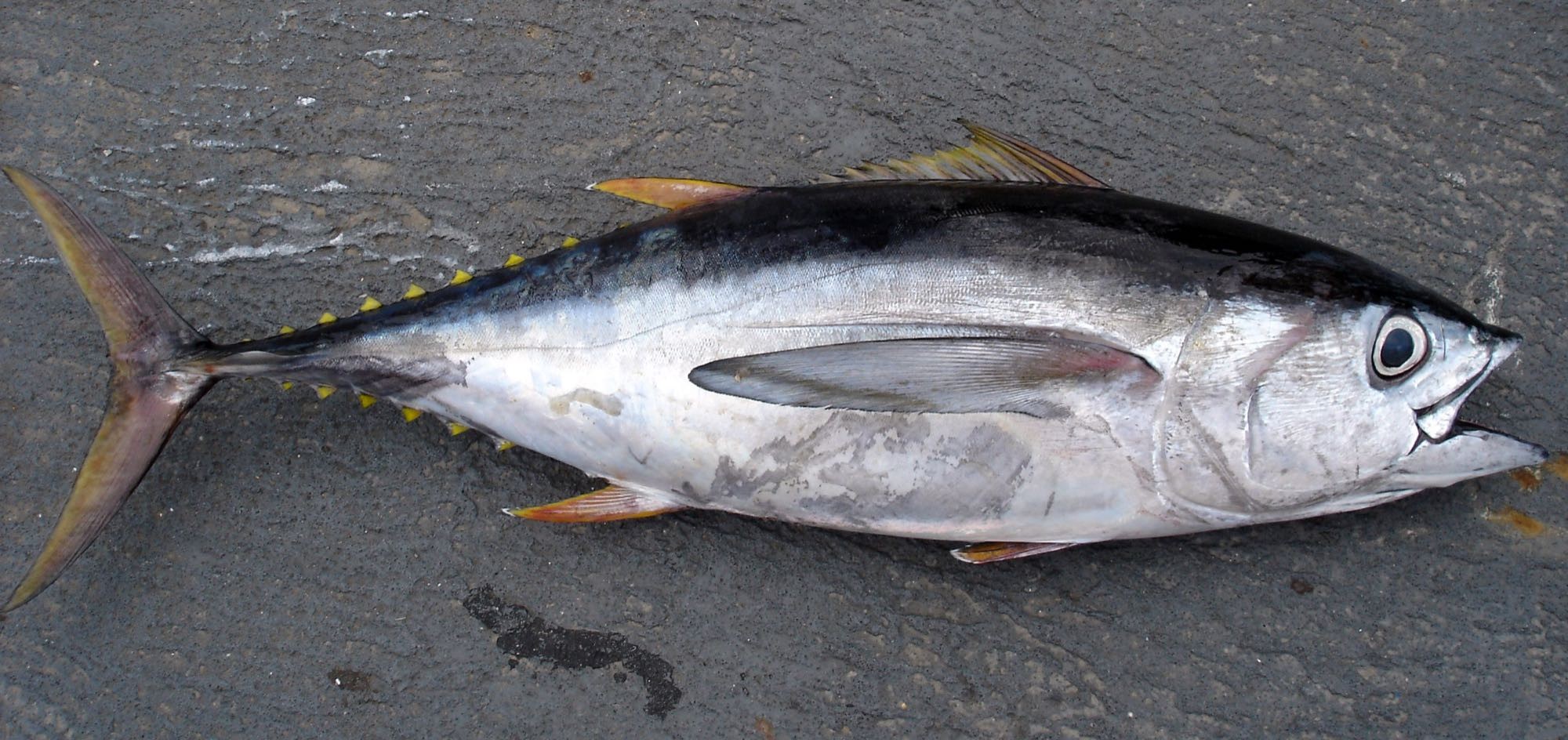
Photo: Allen Shimada / NOAA NMFS Office of Science and Technology, National Oceanic and Atmospheric Administration — Public domain
- Habitat
- Offshore waters
- Methods
- Offshore
- Difficulty
- advanced
- Eating
- fair
Identification
Look for
- Larger eyes than yellowfin tuna — the source of the name and a real field mark, not just a size comparison
- Finlets (the small fins between the dorsal/anal fins and the tail) are bright yellow with black edges — yellowfin's lack the black edging
- First dorsal fin deep yellow, second dorsal and anal fins pale yellow
Local waters
Deep offshore canyon waters, diving to roughly 800 feet — deeper than most other tropical tunas
Primarily a boat fishery here — typically fished by offshore boat.
When to fish
A documented, if less accessible, component of the same offshore canyon tuna fishery as the already-published yellowfin — not a fishery an ordinary shore or inshore angler can reach.
Water temperature
The water, not the calendar, sets the season here — a warm October or a cold snap moves these bands.
Water temperature and the seasonsHow to catch it
Primarily a boat fishery here — typically fished by offshore boat. Technique notes for this species have not been written yet; the baits and rigs below are the documented starting points.
Bait & lures
- Trolled ballyhoo and skirted lures
- Deep-dropped or chunk bait once a school is located
On the table
Eat with caution — check current Virginia fish consumption advisories for the specific waterbody before eating.
- A federal HMS Angling or Charterboat/Headboat permit is required to retain any Atlantic tuna recreationally, with a minimum size and mandatory catch reporting — confirmed live via NOAA's own bigeye tuna species page. Bigeye tuna is specifically named on the FDA/EPA's joint mercury advisory 'Choices to Avoid' list, the same highest-mercury tier as shark, swordfish, king mackerel, marlin, and (Gulf) tilefish — this project could not get a clean direct fetch of the current live FDA chart (repeated 404s), but this is corroborated consistently across multiple independent secondary sources describing the same list. Pregnant/nursing people and young children should avoid it; everyone else should eat it only occasionally.
Where to try
